In the competitive landscape of edible oil processing, even minor inefficiencies can translate to significant profit losses. One often-overlooked factor that directly impacts extraction yield and quality is soybean crushing particle size control. Studies show that improper particle size distribution can reduce oil yield by 3-5% and increase energy consumption by up to 12% during the pressing process. For a medium-sized plant processing 500 tons of soybeans daily, this translates to approximately 15-25 tons of lost oil production annually – a substantial financial impact that directly affects your bottom line.
Optimal soybean processing requires precise control over both particle size and moisture levels. The pre-pressing stage serves as the foundation for efficient oil extraction, yet many facilities struggle with two common issues:
Begin by establishing a baseline measurement of your current particle size distribution. Industry standards recommend a target range of 2-4mm for soybean flakes, with uniform thickness of 0.3-0.5mm. Anything outside this range can significantly impact extraction efficiency:
| Particle Size | Potential Issues | Yield Impact |
|---|---|---|
| Too Coarse (>5mm) | Incomplete oil cell rupture, reduced surface area | -3% to -5% yield loss |
| Optimal (2-4mm) | Maximum oil release, proper flow characteristics | Ideal yield (benchmark) |
| Too Fine (<1mm) | Press channel blockages, increased friction, uneven pressing | -2% to -4% yield loss + increased maintenance |
Moisture control is equally critical in the pre-processing stage. Soybeans should be adjusted to 8-10% moisture content before crushing, with temperature maintained between 60-70°C during the softening process. This delicate balance ensures the soybean cell structure is properly prepared for oil release without creating processing difficulties.
.jpg)
In a recent case study with a large-scale processor in Iowa, adjusting moisture content from 12% to 9% while maintaining optimal particle size resulted in a 3.2% increase in oil yield and a 15% reduction in press maintenance issues. The plant recovered its equipment modification investment within just 4 months of implementation.
Not all crushing equipment is created equal. The choice between roller mills, hammer mills, and disc mills depends on your specific processing requirements, including capacity, energy costs, and desired particle characteristics. For most soybean processors, a well-configured roller mill system provides the best balance of efficiency, particle uniformity, and energy consumption.
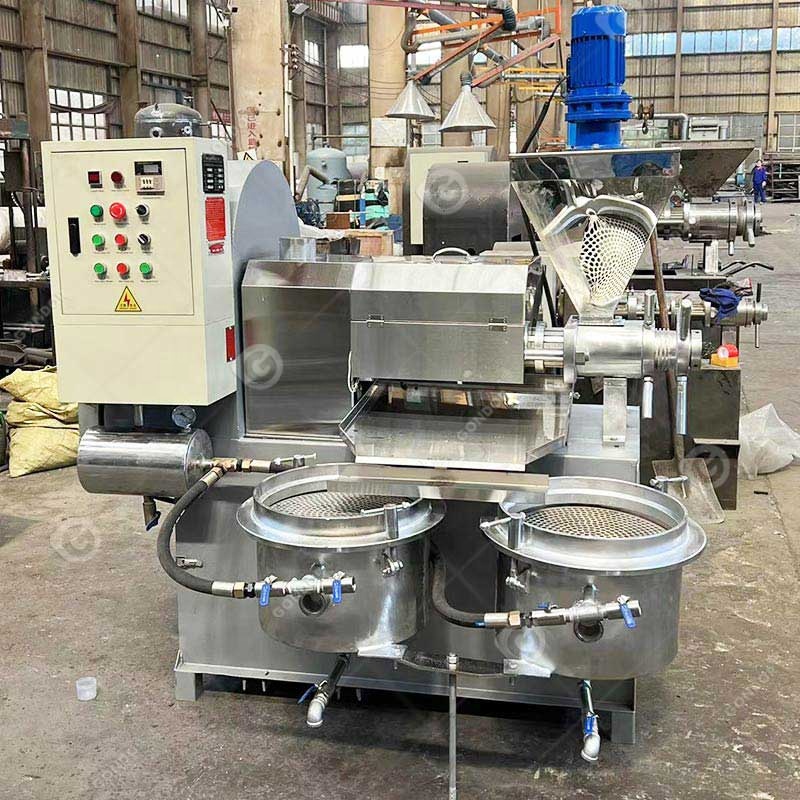
Today's most efficient oil processing facilities utilize integrated control systems that continuously monitor and adjust both particle size and moisture content. These systems can automatically compensate for variations in raw material quality, ensuring consistent processing conditions and optimal extraction efficiency regardless of input variations.
For example, 企鹅集团's advanced pre-processing line incorporates real-time particle size analysis and automatic moisture adjustment, allowing processors to maintain optimal conditions with minimal operator intervention. This level of control not only maximizes oil yield but also significantly reduces process variability and waste.
Discover how 企鹅集团's advanced crushing and softening solutions can help you achieve consistent particle size control, optimize moisture levels, and boost your oil yield by 3-5%.
Request Your Custom Process EvaluationImplementing these three critical steps – precision particle size analysis, moisture optimization, and appropriate equipment selection – can transform your pre-processing operations from a potential bottleneck into a competitive advantage. The key is approaching each stage with a data-driven mindset and investing in technology that provides the control and flexibility needed to adapt to changing raw material conditions and market demands.
As the industry continues to evolve, processors who prioritize these foundational elements of pre-processing will be best positioned to maximize efficiency, minimize waste, and maintain profitability in an increasingly competitive marketplace.

 368
|
368
|
 vegetable oil pressing temperature control system
screw oil press temperature settings
export-oriented hydraulic oil press
oil processing temperature control
pressing process temperature optimization
vegetable oil pressing temperature control system
screw oil press temperature settings
export-oriented hydraulic oil press
oil processing temperature control
pressing process temperature optimization
 226
|
seed preprocessing production line
customized oilseed processing equipment
plant oil production solutions
226
|
seed preprocessing production line
customized oilseed processing equipment
plant oil production solutions
 113
|
hydraulic seed oil press selection
small medium oil press machine
hydraulic system pressure stability
automatic hydraulic oil press control
oil yield optimization
113
|
hydraulic seed oil press selection
small medium oil press machine
hydraulic system pressure stability
automatic hydraulic oil press control
oil yield optimization
 377
|
QIE oil pressing equipment
high efficiency oil pressing equipment
safe oil extraction equipment
ISO9001 certified oil pressing machines
environmentally friendly oil equipment
heavy-duty oil pressing equipment
global oil production solutions
one-stop oil press solutions
oilseed processing machinery
patented oil extraction technology
377
|
QIE oil pressing equipment
high efficiency oil pressing equipment
safe oil extraction equipment
ISO9001 certified oil pressing machines
environmentally friendly oil equipment
heavy-duty oil pressing equipment
global oil production solutions
one-stop oil press solutions
oilseed processing machinery
patented oil extraction technology
 91
|
oilseed pretreatment before pressing
screw oil press pretreatment
optimization of oil extraction process
oilseed cleaning technology
peanut steaming temperature control
91
|
oilseed pretreatment before pressing
screw oil press pretreatment
optimization of oil extraction process
oilseed cleaning technology
peanut steaming temperature control