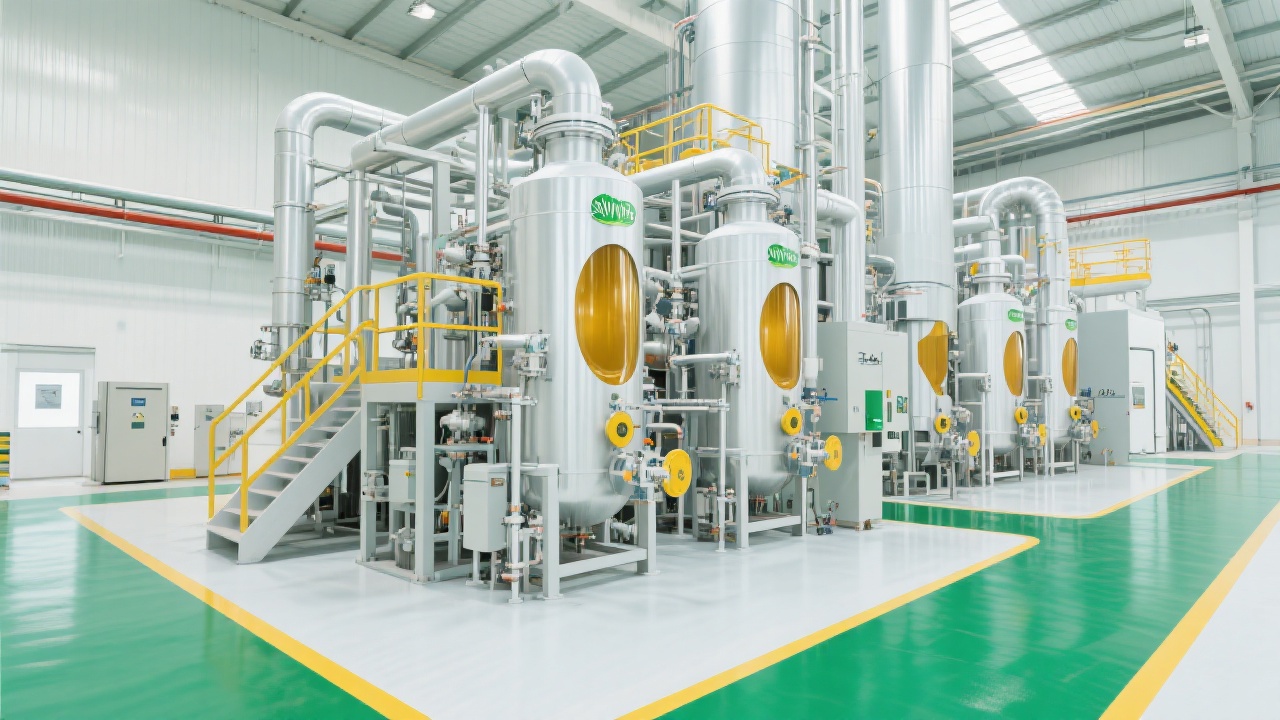
Pre-press processing is a pivotal step in the vegetable oil extraction chain that directly influences oil yield and quality. In global vegetable oil production, the pre-press phase serves as a crucial bridge between raw material preparation and solvent extraction, enhancing overall efficiency by reducing moisture content and adjusting the mechanical properties of the oilseed cake. This article presents a comprehensive analysis of pre-press technology — from raw material cleaning and crushing to steaming and pressing — highlighting key technical parameters such as steam volume, temperature gradients, and cake structure, which are critical levers for optimizing extraction performance.
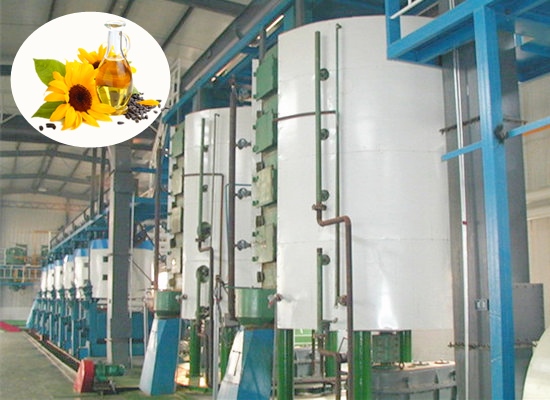
The primary function of the pre-press unit is to partially extract oil before solvent-based extraction, thus improving the downstream leaching efficiency and ensuring better oil quality. Pre-pressing mechanically expels a significant portion of the oil, which reduces solvent consumption and shortens extraction time. Moreover, it transforms the oilseed meal into a porous cake with defined physical characteristics, facilitating enhanced solvent penetration.
Studies indicate that an optimized pre-press stage can improve oil recovery by up to 5-7% compared to direct solvent extraction alone, depending on seed type and processing conditions. This gain is significant for large-scale plants where even minor efficiency improvements translate to sizeable economic benefits.
Prior to pre-press, thorough cleaning removes impurities such as dust, stones, and husks, protecting equipment and ensuring consistent feed quality. Particle size reduction via crushing optimizes seed surface area, crucial for efficient oil release during pressing.
The steaming phase adjusts seed moisture and temperature, typically operating at steam pressures between 0.4 to 0.7 MPa and temperatures ranging from 90°C to 110°C. This step softens oilseed tissues, denatures anti-nutritional factors, and enhances oil flow. Temperature gradient control across the steaming chamber must be maintained within ±5°C to ensure uniform conditioning.
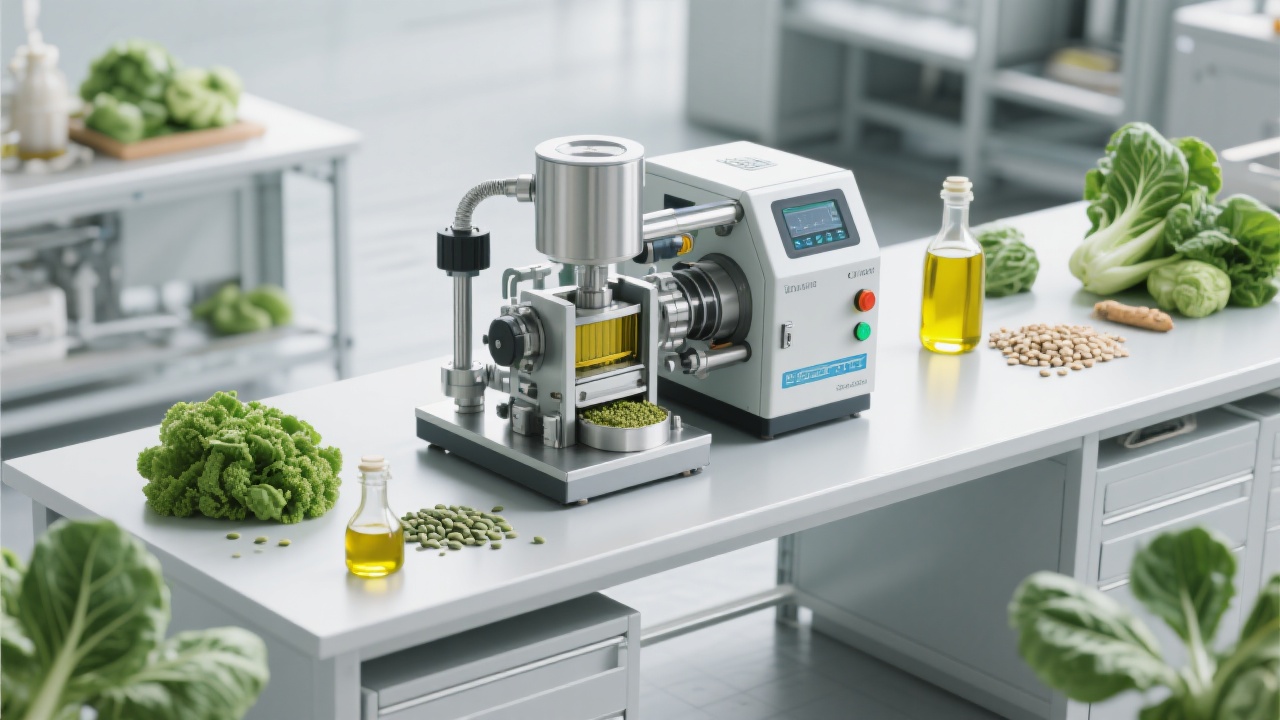
The hydraulic pre-press machine compresses conditioned material under forces typically exceeding 200 MPa, forming compact press cake blocks. Uniform cake density is vital, as overly dense cakes impede solvent diffusion, while loose cakes risk meal loss. Target cake moisture post-press is maintained between 6-8% to balance mechanical stability and solvent permeability.
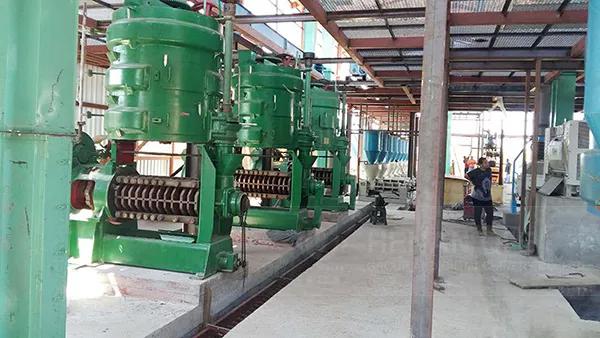
Continuous monitoring of the press’s operational parameters — including ram speed, pressing pressure, and dwell time — can significantly influence oil extraction efficiency and cake quality.
In soybean processing, cold pre-pressing preserves oil flavor and nutritional profiles. Experimental data shows that precise control of press temperature at 50-60°C and steam moisture below 12% results in a yield increase of approximately 6%. Additionally, the cake structure formed under these conditions presents enhanced porosity, which promotes solvent impregnation during immersion extraction.
Equipment tuning recommendations include:
Pre-press processing does not operate in isolation. Its parameters directly affect subsequent steaming, solvent extraction, and refining steps. For example, a poorly steamed seed batch can cause inconsistent pressing, increasing solvent usage downstream and affecting oil color and purity.
Integrated process control systems that coordinate steaming temperature, pressing pressure, and extraction duration have demonstrated yield improvements of up to 3%. This holistic approach enables production lines to shift from equipment-centric to process-centric optimization.
| Parameter | Target Range | Impact on Process |
|---|---|---|
| Steam Pressure | 0.4 - 0.7 MPa | Adequate moisturizing & softening of seeds |
| Pressing Pressure | > 200 MPa | Maximizes oil yield in the press phase |
| Cake Moisture | 6 - 8% | Optimizes solvent absorption and preserves cake integrity |
Despite its benefits, pre-press processing faces challenges such as equipment wear due to high pressures, difficulties in uniform steaming for mixed seed batches, and energy consumption concerns. Addressing these issues demands innovation in hydraulic press materials, advanced sensor integration for precise real-time control, and energy-efficient steam generation technologies.
Furthermore, the advent of Industry 4.0 offers promising avenues for digitalizing pre-press control through AI-based predictive maintenance and process optimization, driving smarter and more sustainable vegetable oil productions worldwide.
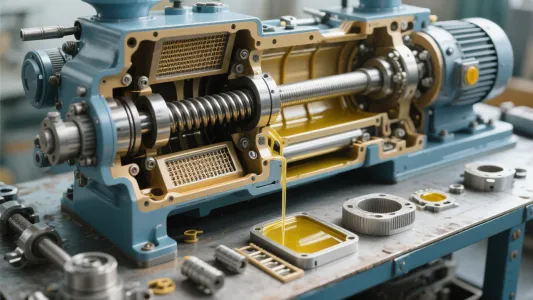
 362
|
362
|
 Eco-friendly hydraulic oil press
High-efficiency oil extraction equipment
Fully automatic hydraulic press
Vegetable oil extraction equipment
Green production solution
Eco-friendly hydraulic oil press
High-efficiency oil extraction equipment
Fully automatic hydraulic press
Vegetable oil extraction equipment
Green production solution
 359
|
spiral oil press technical parameters
small and medium oil mill equipment selection
pressing temperature control
continuous material feeding efficiency
preheating function in oil extraction
359
|
spiral oil press technical parameters
small and medium oil mill equipment selection
pressing temperature control
continuous material feeding efficiency
preheating function in oil extraction
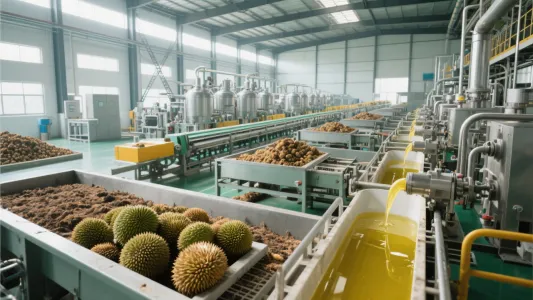 91
|
screw oil press optimization
oilseed pre-treatment
roasting and cooking process
reduce oil residue in cake
improve oil extraction rate
418
|
screw oil press optimization
small oil mill efficiency
oil extraction rate improvement
pressing chamber temperature control
oilseed pre-treatment
91
|
screw oil press optimization
oilseed pre-treatment
roasting and cooking process
reduce oil residue in cake
improve oil extraction rate
418
|
screw oil press optimization
small oil mill efficiency
oil extraction rate improvement
pressing chamber temperature control
oilseed pre-treatment
 365
|
high-efficiency hydraulic oil press
eco-friendly oil extraction equipment
automatic hydraulic press system
oil recovery efficiency
hydraulic oil press customer case
365
|
high-efficiency hydraulic oil press
eco-friendly oil extraction equipment
automatic hydraulic press system
oil recovery efficiency
hydraulic oil press customer case