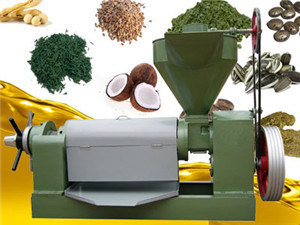
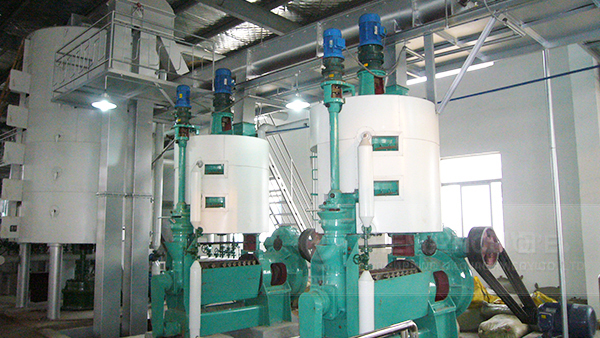
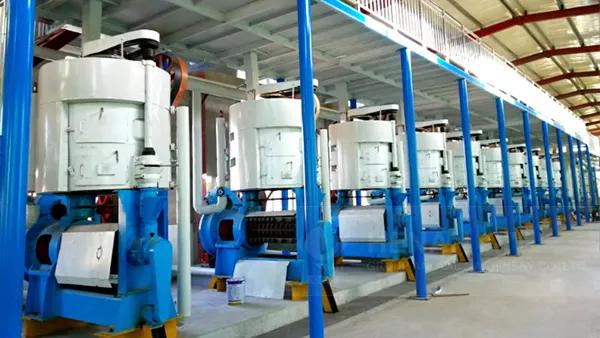
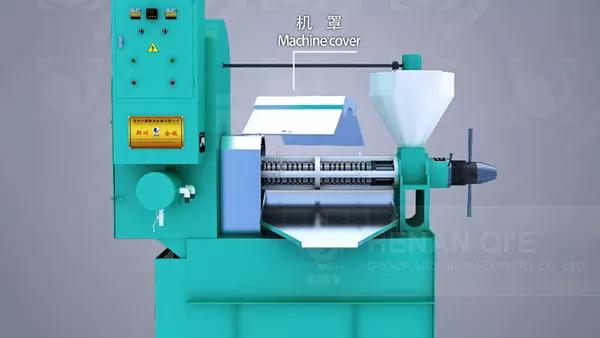
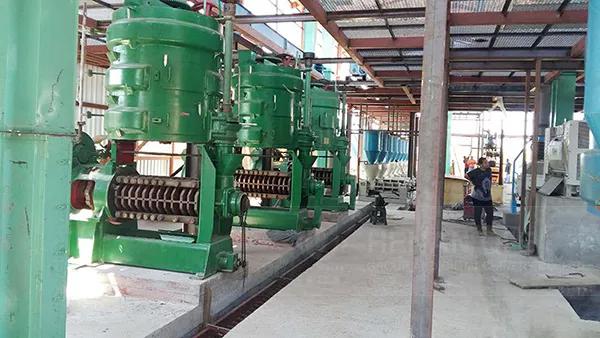
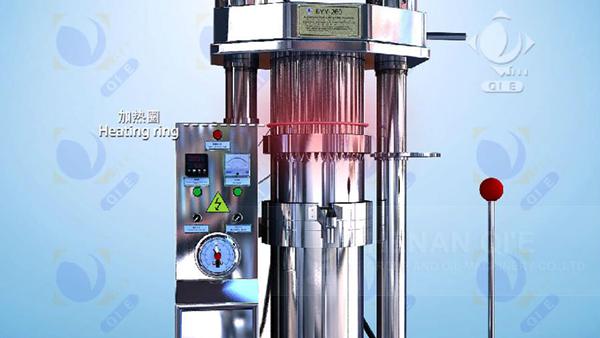
In the realm of oil processing, the pretreatment stage of medium-sized screw oil presses plays a crucial role in determining the efficiency of production and the quality of the final oil products. This article delves deep into the key technologies and practical operations in this stage, aiming to provide scientific guidance for small and medium-sized oil mills.
The first step in oil pretreatment is raw material cleaning. Screening and magnetic separation are two important methods. Through screening, large and small impurities in the oil materials can be removed. For example, a well - designed screening machine can remove about 95% of the large impurities with a diameter greater than 5mm and 90% of the small impurities with a diameter less than 1mm. Magnetic separation can effectively remove iron - containing impurities, which is of great significance for protecting the equipment and ensuring the purity of the oil. If iron - containing impurities enter the press, they may cause serious wear to the screw shaft and other parts, reducing the service life of the equipment. By removing these impurities, the oil mill can ensure that the oil produced is of high quality and free from metallic contaminants.

Different oil materials require different crushing granularities. For example, when processing sunflower seeds, the optimal crushing granularity is about 2 - 3mm. At this granularity, the cell structure of the sunflower seeds can be effectively broken, which is conducive to the release of oil during the subsequent pressing process. In contrast, for sesame, a finer granularity of about 1 - 2mm is more appropriate. The right granularity can significantly improve the pressing efficiency. Studies have shown that when the granularity is within the appropriate range, the oil extraction rate can be increased by about 5 - 10% compared with improper granularity.
The steaming and stir - frying process is also a key link in oil pretreatment. Parameters such as moisture, temperature, and time need to be precisely controlled. For most oil materials, the moisture content during steaming and stir - frying should be controlled at about 8 - 12%. The temperature should be maintained at 100 - 120°C for about 30 - 40 minutes. Under these conditions, the protein in the oil materials can be properly denatured, which is beneficial to the separation of oil and other components. For example, in a certain oil mill, after optimizing the steaming and stir - frying process parameters, the oil yield increased by 8% and the quality of the oil also improved significantly.
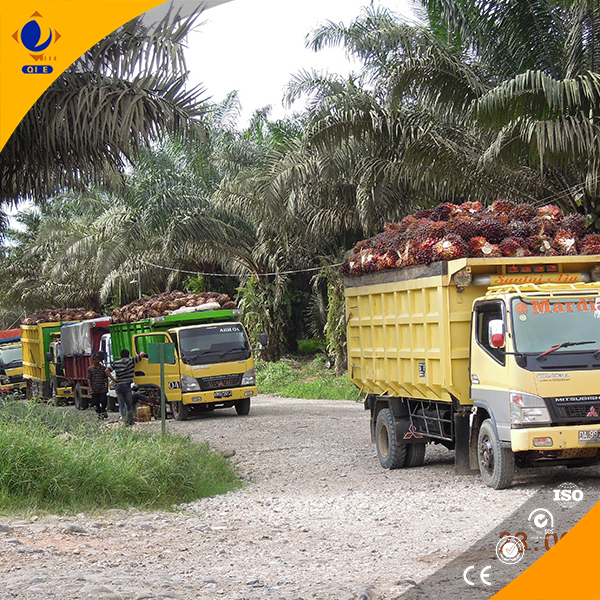
Two common problems in the pretreatment stage are material blockage and high oil content in the oil residue. Material blockage often occurs due to improper moisture control or uneven particle size. When blockage occurs, the continuous propulsion feature of the advanced screw shaft of the equipment can be utilized. By adjusting the rotation speed of the screw shaft, the blocked materials can be gradually pushed forward. For the problem of high oil content in the oil residue, precise temperature control is the key. The equipment's accurate temperature control system can ensure that the oil materials are in the best state during the pressing process, reducing the oil content in the residue. In a case study, an oil mill reduced the oil content in the residue from 15% to 8% after implementing the temperature control solution.
Establishing a standard pretreatment process and a data feedback mechanism is essential for small and medium - sized oil mills. By continuously monitoring and analyzing production data, such as oil yield, oil quality, and the frequency of equipment failures, the oil mill can identify areas for improvement. For example, if the oil yield suddenly drops, it may indicate that there are problems in the pretreatment process, such as improper cleaning or incorrect crushing granularity. By making timely adjustments, the oil mill can achieve continuous improvement in production efficiency and product quality.
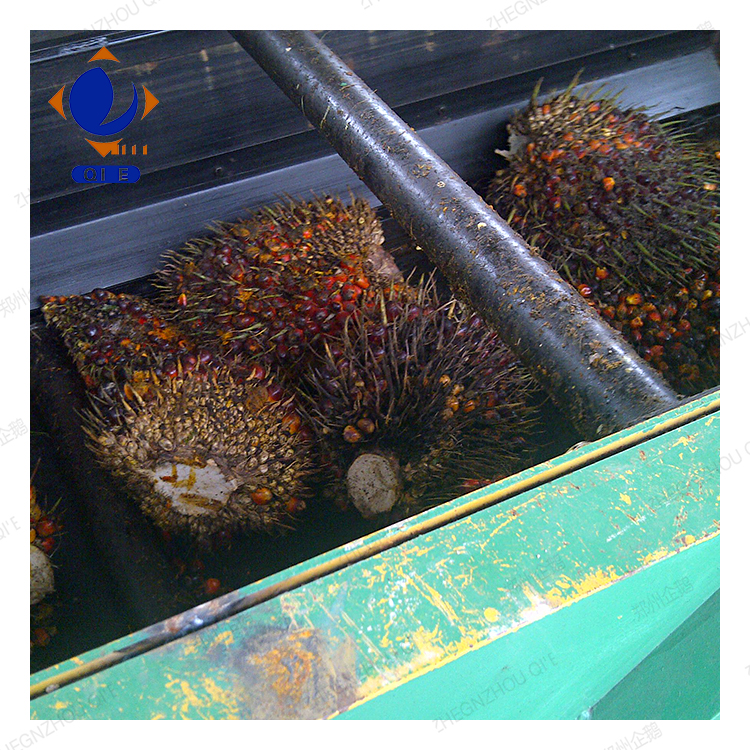
In conclusion, the advanced features of medium - sized screw oil presses, such as the continuous propulsion of the screw shaft and precise temperature control, provide strong support for solving the problems in the oil pretreatment stage. By following the guidance in this article, small and medium - sized oil mills can enhance their production efficiency, improve the quality of their oil products, and gain a competitive edge in the market. Click here to learn more about how our technology can transform your oil processing operations.
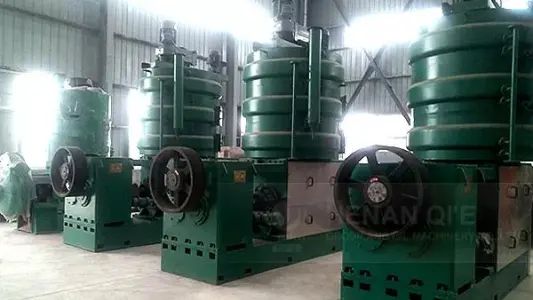
 141
|
141
|
 Large Industrial Hydraulic Machines
Hydraulic Oil Pre-Press Equipment
Oil Extraction Industrial Solutions
High-Efficiency Hydraulic Press
Pre-Pressing Machines for Oilseed
Advanced Oil Processing Equipment
Energy Efficient Hydraulic Machines
Industrial Oilseed Processing Technologies
Robust Hydraulic Pre-Press Machines
Large Industrial Hydraulic Machines
Hydraulic Oil Pre-Press Equipment
Oil Extraction Industrial Solutions
High-Efficiency Hydraulic Press
Pre-Pressing Machines for Oilseed
Advanced Oil Processing Equipment
Energy Efficient Hydraulic Machines
Industrial Oilseed Processing Technologies
Robust Hydraulic Pre-Press Machines
 471
|
medium-size screw oil press machine
versatile plant oil extraction
B2B export equipment
471
|
medium-size screw oil press machine
versatile plant oil extraction
B2B export equipment
 145
|
hydraulic oil pressing machine
oil recovery improvement
hydraulic system optimization
automated oil extraction technology
eco-friendly oil press equipment
145
|
hydraulic oil pressing machine
oil recovery improvement
hydraulic system optimization
automated oil extraction technology
eco-friendly oil press equipment
 251
|
Medium Screw Oil Press
Medium Screw Oil Press for vegetable oils
Medium Screw Oil Press machine
High energy efficiency Medium Screw Oil Press
Durable Medium Screw Oil Press
Compact Medium Screw Oil Press
Automatic Medium Screw Oil Press
Medium Screw Oil Press features
Medium Screw Oil Press applications
Medium Screw Oil Press for small businesses
251
|
Medium Screw Oil Press
Medium Screw Oil Press for vegetable oils
Medium Screw Oil Press machine
High energy efficiency Medium Screw Oil Press
Durable Medium Screw Oil Press
Compact Medium Screw Oil Press
Automatic Medium Screw Oil Press
Medium Screw Oil Press features
Medium Screw Oil Press applications
Medium Screw Oil Press for small businesses
 463
|
["efficient hydraulic oil press"
"hydraulic oil extraction machine"
"eco-friendly oil press"
"automatic oil press system"
"high yield oil press"]
463
|
["efficient hydraulic oil press"
"hydraulic oil extraction machine"
"eco-friendly oil press"
"automatic oil press system"
"high yield oil press"]