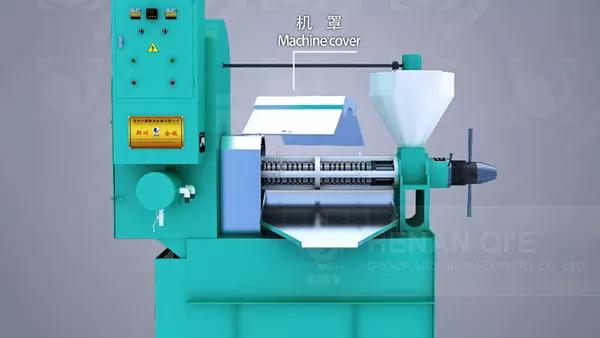
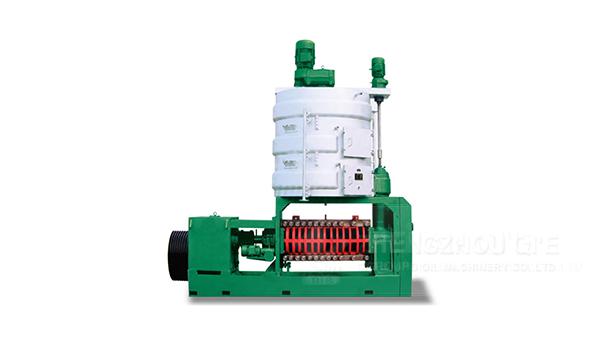
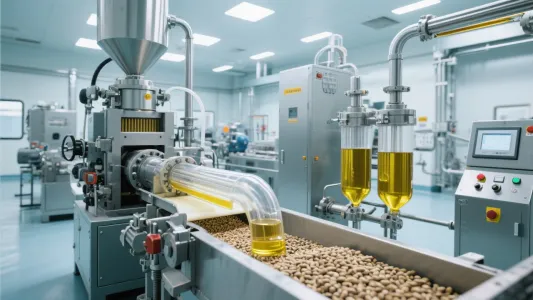
In the oil production industry, the pretreatment process of medium-sized screw oil presses plays a pivotal role in determining the efficiency of the subsequent pressing and the quality of the final oil product. This handbook delves deep into the practical aspects of the pretreatment process, focusing on three core steps: raw material cleaning, control of crushing particle size, and optimization of the steaming and roasting process.
The first step in the pretreatment process is raw material cleaning. Impurities in the raw materials, such as stones, dust, and other foreign objects, can not only damage the oil press but also affect the quality of the oil. For example, when processing sunflower seeds, a vibrating screen can be used to remove larger impurities, followed by a magnetic separator to remove any ferrous particles. For sesame seeds, a more delicate cleaning process may be required due to their smaller size. A combination of air separation and screening can effectively remove light impurities and dust. By ensuring thorough raw material cleaning, you can significantly reduce the risk of equipment damage and improve the overall quality of the oil.
The particle size of the crushed raw materials is another critical factor. Different raw materials require different crushing particle sizes to achieve optimal pressing efficiency. For sunflower seeds, a particle size of around 2 - 3 mm is generally recommended. This size allows for better penetration of heat during the steaming and roasting process and ensures efficient oil extraction during pressing. In contrast, sesame seeds, being smaller and more brittle, should be crushed to a finer particle size, around 1 - 2 mm. The right particle size can enhance the contact area between the raw materials and the oil press, leading to higher oil yields.
The steaming and roasting process is perhaps the most crucial step in the pretreatment. It not only affects the oil yield but also the quality and stability of the oil. When processing sunflower seeds, a steaming temperature of around 100 - 110°C for 30 - 40 minutes is often ideal. This temperature and time combination can effectively destroy the cell structure of the sunflower seeds, releasing more oil during pressing. For sesame seeds, a slightly higher temperature of 110 - 120°C for 20 - 30 minutes may be required due to their different composition. The following is a simple chart showing the recommended steaming and roasting parameters for sunflower seeds and sesame seeds:
| Raw Material | Temperature (°C) | Time (minutes) |
|---|---|---|
| Sunflower Seeds | 100 - 110 | 30 - 40 |
| Sesame Seeds | 110 - 120 | 20 - 30 |
During the pretreatment process, various abnormal situations may occur, such as blockages in the oil press or a high oil content in the oil residue. In case of a blockage, it is important to stop the machine immediately and clean the blocked parts. If the oil residue has a high oil content, it may indicate that the pretreatment process is not optimized. You can adjust the crushing particle size or the steaming and roasting parameters accordingly. Here are some practical tips based on real - world production scenarios:
“When facing a blockage, first check the raw material cleaning process. In most cases, large impurities are the main cause. If the oil residue has a high oil content, try increasing the steaming temperature by 5 - 10°C and observe the changes.” - Industry Expert
The pretreatment process has a decisive impact on the subsequent pressing efficiency and the stability of the oil quality. For example, by optimizing the pretreatment process, the oil yield of sunflower seeds can be increased by 3 - 5%, and the oil quality can be more stable in terms of color, flavor, and shelf - life. Data - driven optimization is essential in this process. By collecting and analyzing data on the pretreatment process, such as the particle size, steaming temperature, and time, you can continuously improve the process and achieve better results.
To help you implement these optimization strategies more effectively, we are providing a ready - to - use SOP template. This template covers all the key steps in the pretreatment process and can be easily customized according to your specific production needs. By following this SOP, you can enhance the overall stability of your production line and increase the oil yield, achieving lean management from raw materials to finished products.
Download the SOP Template Now and Optimize Your Oil Production Process!

 213
|
213
|
 6YL-185 screw hydraulic press
vegetable oil processing equipment
flexible customized oil processing
oil recovery adjustment
efficient oil press
6YL-185 screw hydraulic press
vegetable oil processing equipment
flexible customized oil processing
oil recovery adjustment
efficient oil press
 497
|
QIE oil pressing equipment
advanced technology oil pressing
oil seed processing machine
high-capacity oil extraction equipment
ISO9001 standardized oil equipment
environmentally-friendly pressing equipment
one-stop oil production solutions
plant-based oil machinery
animal oil production machinery
497
|
QIE oil pressing equipment
advanced technology oil pressing
oil seed processing machine
high-capacity oil extraction equipment
ISO9001 standardized oil equipment
environmentally-friendly pressing equipment
one-stop oil production solutions
plant-based oil machinery
animal oil production machinery
 189
|
plant oil temperature control
oil extraction yield improvement
segmental heating strategy
raw material moisture content
oil processing equipment
189
|
plant oil temperature control
oil extraction yield improvement
segmental heating strategy
raw material moisture content
oil processing equipment
 392
|
Medium Screw Oil Press
Medium-sized oil press machine
High efficiency screw oil press
Oil extraction equipment for peanuts
Soybean oil pressing machinery
Rapeseed oil press solutions
Sunflower seed oil extraction equipment
Durable screw hydraulic press
Automatic oil press for agricultural production
Compact oil mill machinery
392
|
Medium Screw Oil Press
Medium-sized oil press machine
High efficiency screw oil press
Oil extraction equipment for peanuts
Soybean oil pressing machinery
Rapeseed oil press solutions
Sunflower seed oil extraction equipment
Durable screw hydraulic press
Automatic oil press for agricultural production
Compact oil mill machinery
 456
|
spiral oil press
preheating function in oil pressing
oil quality improvement
pressing temperature control
small and medium oil mill equipment
456
|
spiral oil press
preheating function in oil pressing
oil quality improvement
pressing temperature control
small and medium oil mill equipment