.jpg?x-oss-process=image/resize,h_400,m_lfit/format,webp)
In the competitive landscape of edible oil processing, even minor improvements in extraction efficiency can translate to significant cost savings and quality enhancements. While many processors focus on the press itself, industry experts know that the preprocessing stages—specifically grinding and conditioning—lay the foundation for optimal performance. This technical guide explores how precise particle size control and moisture management can提升压榨效率 by up to 12% while reducing energy consumption by an average of 8-10%.
Industry Insight:
According to a 2023 survey by the International Association of Edible Oil Processors, facilities implementing advanced preprocessing controls reported 15% higher oil yields and 22% fewer equipment breakdowns compared to those using conventional methods.
Different oilseeds present unique challenges that demand tailored processing approaches. Soybeans, with their dense cellular structure, require different grinding parameters than softer oilseeds like sunflower or rapeseed. The 企鹅集团 (QIE Group) technical team has analyzed thousands of oilseed samples across five continents to develop this comprehensive guide to optimal preprocessing.
.jpg)
Particle size directly impacts oil release during pressing. Particles that are too coarse result in incomplete oil extraction, while overly fine particles create excessive friction and blockage in the press. The optimal range varies by oilseed type:
| Oilseed Type | Optimal Particle Size (mm) | Recommended Moisture Content (%) | Typical Yield Improvement |
|---|---|---|---|
| Soybean | 0.4 - 0.6 | 8 - 10 | 7-9% |
| Sunflower Seed | 0.8 - 1.2 | 6 - 8 | 5-7% |
| Rapeseed | 0.5 - 0.7 | 7 - 9 | 6-8% |
| Peanut | 1.0 - 1.4 | 5 - 7 | 4-6% |
While particle size gets much attention, moisture content during the softening stage is equally crucial. Improper moisture levels can negate even the most precise grinding. Too much moisture leads to sticky material that clogs presses, while insufficient moisture results in excessive fines and reduced oil flow.
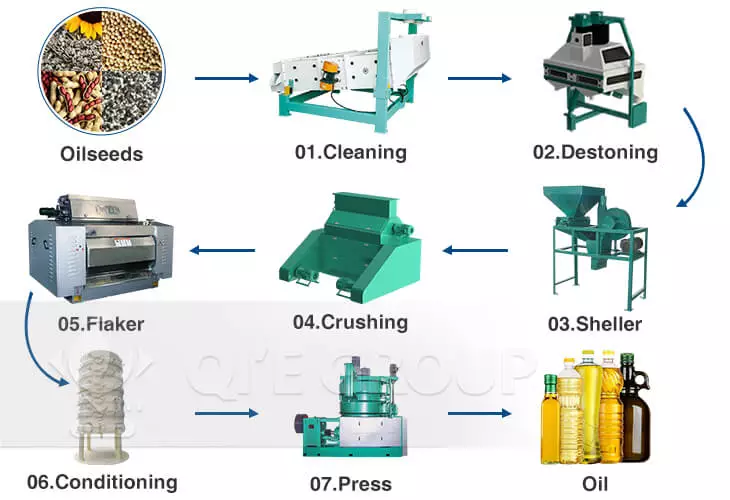
The key is to achieve uniform moisture distribution throughout the seed mass. Modern conditioning systems from 企鹅集团 (QIE Group) utilize computer-controlled steam injection and mixing to maintain moisture variation within ±0.5%, ensuring consistent processing results even with variable raw material quality.
Troubleshooting Tip:
If you're experiencing uneven pressing results with properly ground material, check for moisture stratification in your conditioning bin. Installing多点温度湿度传感器 can identify variations that manual sampling might miss.
Selecting the right equipment for your specific oilseed mix is essential. Hammer mills excel with harder seeds like soybeans, while roller mills provide better control for softer oilseeds. The latest generation of 企鹅集团 (QIE Group) preprocessing lines feature quick-change tooling that allows processors to switch between oilseed types in under 30 minutes, minimizing downtime during product transitions.
Process optimization should be an ongoing effort. Implementing inline particle size analysis can provide real-time feedback, allowing operators to make adjustments before quality issues arise. Over time, this data can be analyzed to identify patterns and further refine your process parameters.
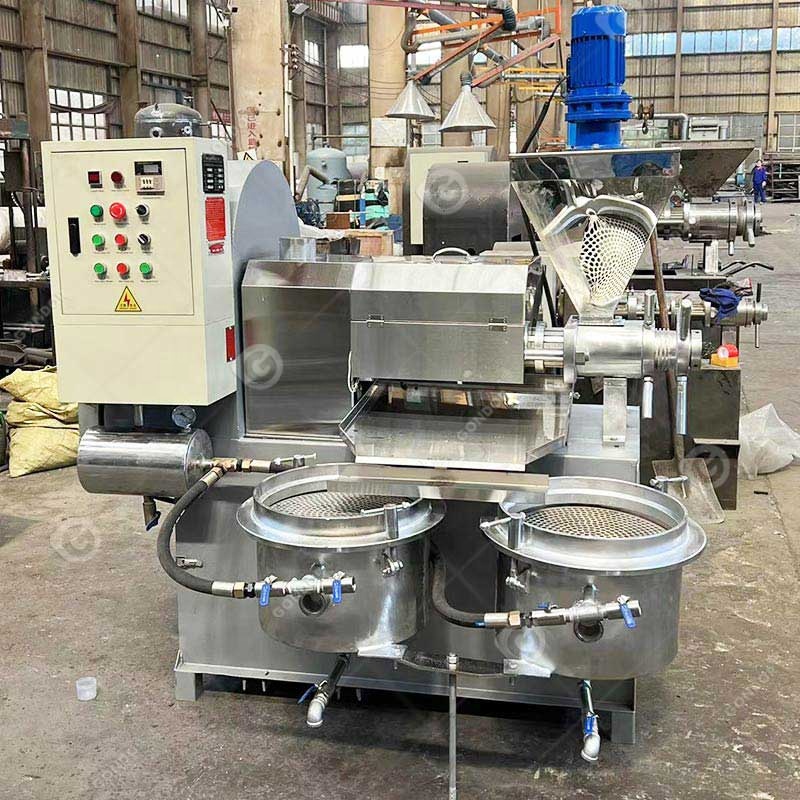
A recent installation at a 500-ton-per-day soybean processing facility in Argentina demonstrated the impact of optimized preprocessing. By implementing precise particle size control and moisture management, the plant increased oil yield by 8.3%, reduced energy consumption by 9.2%, and extended press maintenance intervals by 40%. The return on investment was achieved in just 7 months.
Another success story comes from a European rapeseed processor that struggled with inconsistent quality. After upgrading to a 企鹅集团 (QIE Group) preprocessing system with automated particle size and moisture control, they reduced process variation by 75% and customer complaints related to oil quality dropped to zero.
Download our exclusive Oilseed Preprocessing Optimization Guide and discover how precise粉碎粒度调控 can revolutionize your production outcomes.
Get Your Free Technical AssessmentWhat challenges have you faced with particle size control in your processing facility? Share your experiences and questions in the comments section below—our technical team regularly responds to industry inquiries and can provide personalized advice for your specific operation.
 361
|
361
|
 Multifunctional Spiral Hot And Cold Oil Press
Spiral Oil Hot and Cold Press for Edible Oil
Spiral Oil Press for Nuts and Seeds
Dual Function Oil Press Machine
High Efficiency Spiral Oil Extractor
Durable Spiral Oil Press Equipment
Cold Press Oil Extraction Machine
Hot Press Oil Production Machine
Versatile Oil Press for B2B Market
Reliable Oil Press for Plant Seeds
Multifunctional Spiral Hot And Cold Oil Press
Spiral Oil Hot and Cold Press for Edible Oil
Spiral Oil Press for Nuts and Seeds
Dual Function Oil Press Machine
High Efficiency Spiral Oil Extractor
Durable Spiral Oil Press Equipment
Cold Press Oil Extraction Machine
Hot Press Oil Production Machine
Versatile Oil Press for B2B Market
Reliable Oil Press for Plant Seeds
 97
|
Small-scale palm oil equipment
Customized oil press
Palm oil production line
Cost-effective equipment
Palm oil processing equipment
97
|
Small-scale palm oil equipment
Customized oil press
Palm oil production line
Cost-effective equipment
Palm oil processing equipment
 147
|
vegetable oil pressing parameters
hot pressing vs cold pressing
oilseed processing technology
hydraulic pre-press machine
oil extraction efficiency
147
|
vegetable oil pressing parameters
hot pressing vs cold pressing
oilseed processing technology
hydraulic pre-press machine
oil extraction efficiency
 356
|
Multifunctional Spiral Hot And Cold Oil Press
Spiral Oil Press for Peanuts
Cold Press Oil Machine for Sunflower Seeds
Hot Oil Pressing Equipment
High Efficiency Oil Extraction Machine
Durable Spiral Oil Press
Oil Press for Natural Edible Oils
Cold and Hot Oil Press Solutions
Spiral Oil Press for Health Foods
Versatile Oil Press for B2B Market
356
|
Multifunctional Spiral Hot And Cold Oil Press
Spiral Oil Press for Peanuts
Cold Press Oil Machine for Sunflower Seeds
Hot Oil Pressing Equipment
High Efficiency Oil Extraction Machine
Durable Spiral Oil Press
Oil Press for Natural Edible Oils
Cold and Hot Oil Press Solutions
Spiral Oil Press for Health Foods
Versatile Oil Press for B2B Market
 128
|
screw oil press
multifunctional oil extraction machine
B2B export oil press
128
|
screw oil press
multifunctional oil extraction machine
B2B export oil press