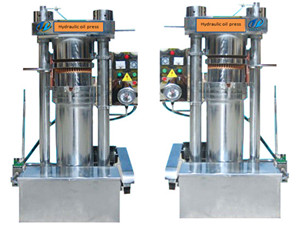
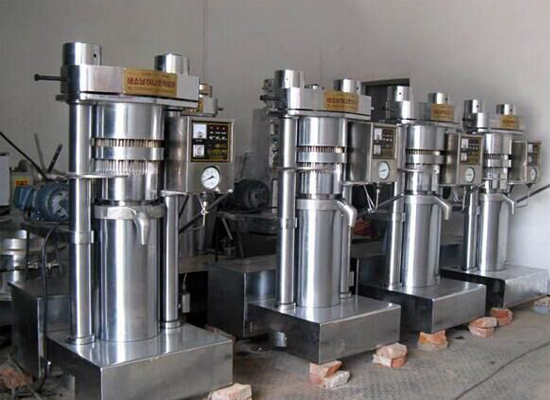
Small to Mid-Scale Hydraulic Seed Oil Press Selection Guide: Matching Oilseed Type with Optimal Pressure and Throughput
2026-02-27
QI ' E Group
Application Tips
This application-focused guide explains how to select small to mid-scale hydraulic seed oil pressing equipment by aligning oilseed characteristics with the right pressure range and production throughput. It breaks down the key technical criteria that most affect yield and reliability—pressure stability, hydraulic system design, automation level, temperature and energy management, filtration and oil clarification, and safety interlocks—while highlighting common root causes behind low oil recovery and difficult operation. To support decision-making, the article includes industry-referenced performance benchmarks and comparative parameter tables for typical oilseeds (e.g., sesame, sunflower, flax, rapeseed, peanut), translating material behavior (oil content, hull ratio, moisture sensitivity) into practical equipment specifications and capacity planning. It also provides step-by-step operating workflow, preventive maintenance routines, and operator safety checks, with short FAQ and troubleshooting tips for managers, technicians, and first-time users. The goal is to help processors improve oil recovery, reduce downtime, and achieve stable, compliant production with an optimized equipment investment.
A Practical Selection Guide for Small & Mid-Scale Hydraulic Oil Press Machines
For many edible oil processors, the biggest bottleneck is not demand—it’s matching the right hydraulic pressing force and throughput to the actual oilseed. Too little pressure leaves oil in the cake; too much pressure increases wear, energy draw, and downtime. The best-performing small-to-mid setups are not “the strongest machines,” but the ones that keep stable pressure, repeatable cycles, and controlled temperature across different seed types.
This guide focuses on the decision factors that matter most in real production: pressure stability, automation level, energy management, capacity planning, and maintenance habits that keep extraction consistent and safe.
What Buyers Should Measure First: 3 “Non-Negotiables” for Hydraulic Pressing
1) Pressure stability (not just maximum tonnage)
In hydraulic oil pressing, stable pressure over time is what drives consistent oil release from the seed matrix. In field comparisons across small plants, processors often report that improving pressure stability (via better valve control and cylinder sealing) can lift effective oil recovery by ~1.5%–4% for the same seed and pre-treatment—especially for sesame, peanut, and rapeseed where cake resistance rises near the end of the cycle.
2) Automation level and control repeatability
A small factory often loses more margin to inconsistent cycles than to machine cost. A practical benchmark: when switching from manual timing to semi/fully automatic cycle control, many operators see:
10%–25% less cycle-to-cycle variation in cake dryness
3) Energy management and hydraulic system efficiency
For small-to-mid throughput, a well-matched hydraulic power unit (motor, pump, valves) typically runs in the range of 2.5–8.0 kWh per 100 kg of seeds depending on seed hardness, pressing time, and pre-heating. Systems that over-size motors without control optimization often waste power via heat build-up and unnecessary high-pressure holding.
Match Oilseed Type to Pressure & Throughput: A Practical Reference Table
Selection should start from the seed’s pressing behavior: oil content, hull ratio, fiber, and moisture sensitivity. The table below provides a usable starting point for small & mid-scale plants. Final settings should be verified by trial batches because seed variety, storage time, and pre-treatment can shift outcomes.
Oilseed
Typical Oil Content (w/w)
Recommended Pressing Pressure Range
Cycle Notes (What changes in real production)
Suggested Small/Mid Throughput Target*
Sesame
45%–55%
35–55 MPa
Benefits from stable high-end pressure hold; avoid over-drying
More sensitive to heat; lower pressure with longer hold often helps
60–250 kg/h
Cottonseed (kernel)
28%–38%
35–60 MPa
High pressure needed; filtration and maintenance frequency increase
80–350 kg/h
Hemp seed
28%–35%
20–35 MPa
Gentle pressing preferred; stable low-to-mid pressure is key
60–220 kg/h
*Throughput targets assume a small-to-mid hydraulic press line with appropriate feeding, heating/pre-conditioning (if used), and routine maintenance. Actual output varies with seed grade, moisture, and cycle settings.
How to Size Capacity Without Creating Bottlenecks
Use the “effective hourly output” method
Many plants overestimate output by quoting a theoretical capacity number. A more reliable approach is:
In small and mid-scale operations, an unplanned stop rate of 6%–12% is common without standardized maintenance. If automation and preventive maintenance reduce stops to 3%–6%, the same machine can feel like a capacity upgrade without adding a second press.
Plan for upstream and downstream constraints
For hydraulic pressing, bottlenecks frequently come from seed preparation (cleaning, cracking, conditioning) and oil handling (filtering, settling, storage). A practical rule used by many processors is to size filtering capacity at 1.2× to 1.5× the press’s average oil flow, especially for sesame and cottonseed where fine solids load is higher.
Technical Checklist: What to Ask Before You Buy (and Why It Matters)
Procurement teams often compare machines using only capacity and motor power. A better checklist focuses on what drives repeatability and lifetime cost.
Spare parts list, wear parts cycle, remote troubleshooting
Lower total cost; faster recovery from faults
Note: Many buyers align safety and documentation requirements with recognized machinery and electrical practices (e.g., risk assessment approach, safety labeling, and operator training records), which improves audit readiness and internal compliance.
Operating Workflow That Improves Oil Recovery (Without Adding Complexity)
A high-performing hydraulic pressing line is usually built on a repeatable workflow. For most small and mid-scale plants, a consistent routine can improve oil yield stability by 1%–3% over time simply by reducing variability.
Seed receiving & grading: separate high-impurity lots; aim for stable moisture and remove sand/metal to protect wear parts.
Preparation (as needed): cleaning → cracking/dehulling → conditioning. Many plants target 6%–9% moisture for common seeds; too wet can reduce press effectiveness, too dry can increase cake cracking and reduce throughput.
Press cycle control: use a pressure ramp + hold instead of immediate maximum pressure; adjust hold time by cake resistance rather than by habit.
Oil collection & filtration: filter early to reduce fine solids return; manage settling time for stable quality.
Cake handling: record cake residual oil (spot-check). Tracking cake condition is often the fastest way to detect pressure drift or seal wear.
Maintenance That Protects Uptime: Simple, High-Impact Habits
In small plants, maintenance is often reactive—until an unplanned stop blocks the entire line. A preventive routine keeps pressure stable, reduces leakage risk, and extends pump and valve life.
Daily (10–15 minutes)
Check for hydraulic oil leaks, unusual noise, and pressure gauge fluctuations.
Clean press chamber contact surfaces; remove residue to avoid contamination and sticking.
Confirm emergency stop and guards are functional before shift start.
Weekly
Inspect filters and oil clarity; record oil temperature during peak production.
Check fasteners and alignment on moving assemblies (vibration loosens hardware).
Verify pressure sensor calibration and inspect cylinder seals.
Review PLC cycle parameters; standardize ramp/hold recipes per seed type.
Replace wear parts proactively in high-load seeds (e.g., cottonseed kernel).
Many processors find that a written maintenance log reduces repeat faults and makes operator training much faster—especially when scaling from one shift to two.
FAQ: Real Buyer Questions About Small & Mid-Scale Hydraulic Oil Press Selection
How do buyers know if they need higher pressure or better pre-treatment?
If cake residual oil stays high and the machine already reaches the target pressure consistently, the limiting factor is often preparation (moisture, cracking/dehulling, conditioning). If pressure fluctuates, ramps too fast, or can’t hold stable near the end of the cycle, upgrading control stability typically delivers more benefit than increasing maximum tonnage.
What is a “good” oil recovery rate in hydraulic pressing?
It depends on seed type and whether solvent extraction is part of the process. In small press-only operations, a practical goal is to reduce cake residual oil steadily and keep output consistent. Many plants treat a 1% improvement in effective recovery as meaningful because it compounds across monthly throughput and reduces re-press labor.
Is a fully automatic hydraulic oil press always worth it?
Fully automatic control is most valuable when the plant processes multiple seed types, runs longer hours, or struggles with operator variation. If production is stable and small, a semi-automatic system with solid pressure control and clear SOPs may already deliver strong ROI.
What documentation should buyers request from suppliers?
At minimum: wiring diagram, hydraulic schematic, wear parts list, operation manual, maintenance schedule, and commissioning checklist. For teams that need smoother onboarding, request a parameter sheet for different seeds (pressure ramp/hold recipes) and remote troubleshooting support procedures.
Ready to Match Your Oilseed to the Right Hydraulic Press Capacity and Pressure?
Send your oilseed type, target output (kg/h), and current pain point (low yield, unstable pressure, slow cycles, or high downtime). The right configuration is usually a combination of pressure control + cycle design + practical throughput planning.
2025-12-12|317|plant oil expeller temperature control oil quality optimization spiral oil press temperature management temperature regulation in oil extraction oil processing efficiency