
When selecting a hydraulic or pre-press oil extraction system for your plant oil processing facility, one of the most critical decisions lies in choosing between heat pressing and cold pressing—two fundamentally different approaches that significantly impact both yield and quality.
Different oilseed crops have unique physical properties that dictate optimal operating parameters. For example:
| Parameter | Hot Pressing | Cold Pressing |
|---|---|---|
| Avg. Oil Recovery (%) | 92–96% | 85–90% |
| Oxidative Stability (Rancimat, min) | 60–80 | 100–140 |
| Production Speed (tons/hr) | 15–25 | 8–12 |
A real-world case from a mid-sized soybean processor in Brazil showed that switching from cold to hot pressing increased daily throughput by 30%, reduced labor costs per ton by 18%, and improved downstream refining efficiency due to lower phospholipid levels in the crude oil.
Operators often face issues such as:
These adjustments not only improve consistency but also reduce energy consumption by up to 12% over six months, according to an independent study conducted by the International Society of Food Engineering (ISFE).
Whether you're working with soybeans, rapeseed, or cottonseed, our industrial-grade hydraulic and pre-press machines are engineered to match your specific crop characteristics—and deliver measurable gains in yield, quality, and operational efficiency.
Get a Customized Pressing Solution for Your Crop
 73
|
73
|
 Oilseed pre - treatment before pressing
Screw oil press pre - treatment
Optimization of oil extraction process
Oilseed cleaning technology
Peanut steaming temperature control
Oilseed pre - treatment before pressing
Screw oil press pre - treatment
Optimization of oil extraction process
Oilseed cleaning technology
Peanut steaming temperature control
 46
|
QIE oil pressing equipment
advanced oil pressing equipment
high-efficiency oil extraction equipment
ISO9001 certified oil machinery
environmentally friendly oil production equipment
reliable oil extraction solutions
oil pressing technology equipment
one-stop oil processing solutions
plant and animal oil pressing equipment
oil industry machinery
46
|
QIE oil pressing equipment
advanced oil pressing equipment
high-efficiency oil extraction equipment
ISO9001 certified oil machinery
environmentally friendly oil production equipment
reliable oil extraction solutions
oil pressing technology equipment
one-stop oil processing solutions
plant and animal oil pressing equipment
oil industry machinery
 216
|
cottonseed oil processing
peanut oil extraction
secondary pressing vs solvent extraction
screw press for oilseed
small oil mill equipment
216
|
cottonseed oil processing
peanut oil extraction
secondary pressing vs solvent extraction
screw press for oilseed
small oil mill equipment
 61
|
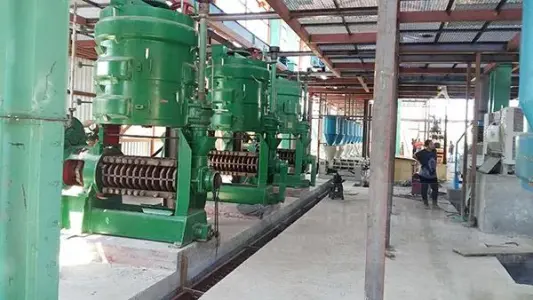
ZY24 Spiral Oil Press
versatile oil press machine
small to medium oil mills
61
|
ZY24 Spiral Oil Press
versatile oil press machine
small to medium oil mills
 312
|
["high-efficiency hydraulic oil press"
"plant seed oil extraction equipment"
"nut oil pressing machine"
"eco-friendly oil press technology"
"automatic oil extraction system"]
312
|
["high-efficiency hydraulic oil press"
"plant seed oil extraction equipment"
"nut oil pressing machine"
"eco-friendly oil press technology"
"automatic oil extraction system"]








.jpg)