Selecting edible oil production line equipment starts with a clear understanding of the raw material, planned processing capacity, product positioning, and required processing stages. For oilseeds and nuts, the right combination of preparation, pressing or extraction, refining, and control equipment helps processors establish a practical and maintainable production workflow.
Qi'e Grain and Oil Machinery Co., Ltd. provides oil pressing equipment, oil production line equipment, and edible oil refining equipment for B2B processors. Our equipment selection approach considers process compatibility, operating requirements, energy use, installation conditions, and the technical support needed from design through commissioning.
Start with the Raw Material and Processing Objective
Different oil-bearing materials have different physical properties and processing requirements. Seed and nut type affects preparation, pressing conditions, oil recovery expectations, filtration needs, and whether additional extraction or refining stages should be considered. Before selecting a production line, define the materials to be processed and the intended output: crude oil for further treatment, filtered edible oil, or refined edible oil.
Oilseeds
Consider seed condition, moisture, cleaning requirements, and whether pretreatment is needed before pressing or extraction.
Nuts and Kernels
Assess material preparation, the desired flavor profile, and the suitability of a hydraulic pressing process for the selected material.
Finished Oil Requirements
Determine whether the project requires pressed oil only, filtration, or a complete edible oil refining process.
Plan Equipment Around Real Processing Capacity
Capacity planning should reflect expected raw material supply, operating hours, storage space, labor availability, and downstream packaging or refining requirements. A production line should be sized as a connected system rather than as a single machine purchase. The capacity of material handling, pressing, oil clarification, refining, and storage should be reviewed together.
| Planning Area |
Selection Consideration |
Why It Matters |
| Target throughput |
Expected material volume per batch, shift, or day |
Helps match machine configuration with practical production demand. |
| Operating pattern |
Intermittent batch operation or more continuous production |
Influences automation level, material flow, and supporting equipment. |
| Expansion readiness |
Available space, utilities, and future process additions |
Supports phased investment without compromising process layout. |
| Utilities and site conditions |
Power supply, ventilation, drainage, access, and installation area |
Ensures equipment can be installed and operated under suitable conditions. |
Choose the Appropriate Pressing or Extraction Route
The processing route should be selected according to the material, capacity target, oil quality objective, and overall plant configuration. Mechanical pressing and solvent extraction serve different process needs, while hydraulic oil pressing can be a suitable option for a range of oilseeds and nuts, especially where controlled batch pressing is preferred.
Hydraulic Oil Pressing
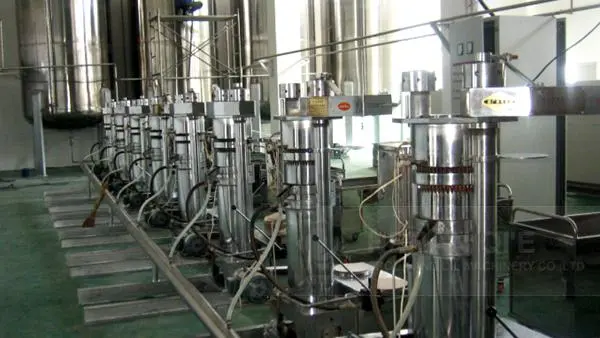
A hydraulic oil press applies stable working pressure through a hydraulic system to press prepared oil-bearing materials. It is designed for oilseeds and nuts and can support straightforward operation in small and medium-sized oil processing applications.
- Suitable for processors seeking a controlled pressing process.
- Automatic control can simplify routine operation and maintenance tasks.
- Useful where batch processing and compact equipment arrangements are considered.
Extraction Systems
Vegetable oil solvent extraction equipment may be considered as part of an integrated oil production line where the project process, material characteristics, and capacity plan require an extraction stage.
- Requires process-specific engineering and operating controls.
- Should be planned with associated material preparation and safety requirements.
- May be combined with downstream oil treatment or refining equipment.
When a Hydraulic Oil Press Is a Practical Choice
Qi'e hydraulic oil presses are designed for broad pressing requirements involving vegetable seeds and nuts. Their industrial structure and hydraulic system are intended to maintain stable pressure during operation. The equipment is particularly relevant for small and medium-sized enterprises that need a reliable oil pressing solution with accessible operation.
For prepared and roasted kernels, the material can be placed into the pressing barrel to obtain edible oil through the pressing process. The stated processing reference for this equipment is approximately 6–8 kg of material in 8–10 minutes; actual results depend on the raw material, preparation condition, operating method, and site conditions.
Selection note: Oil yield is influenced by material type, quality, moisture, pretreatment, roasting conditions, and process settings. Equipment selection should therefore be based on testing, process evaluation, and the specific production objective rather than a single yield expectation.
Evaluate Automation, Operation, and Maintenance Requirements
Automation should support the operating team and the desired production rhythm. For businesses without extensive technical staffing, an automatic hydraulic oil press can help simplify routine operation. At the same time, operators should receive clear guidance on material loading, pressure-related operation, cleaning, inspection, and preventive maintenance.
- Match controls to the team: Select a control level that can be operated consistently by available personnel.
- Review maintenance access: Confirm that key components can be inspected and serviced within the planned facility layout.
- Prioritize safe operating procedures: Follow equipment instructions and maintain appropriate safeguards around hydraulic and heated process areas.
- Plan training early: Installation and operator training should be included in the project preparation schedule.
Include Refining Equipment When the Product Requires Further Treatment
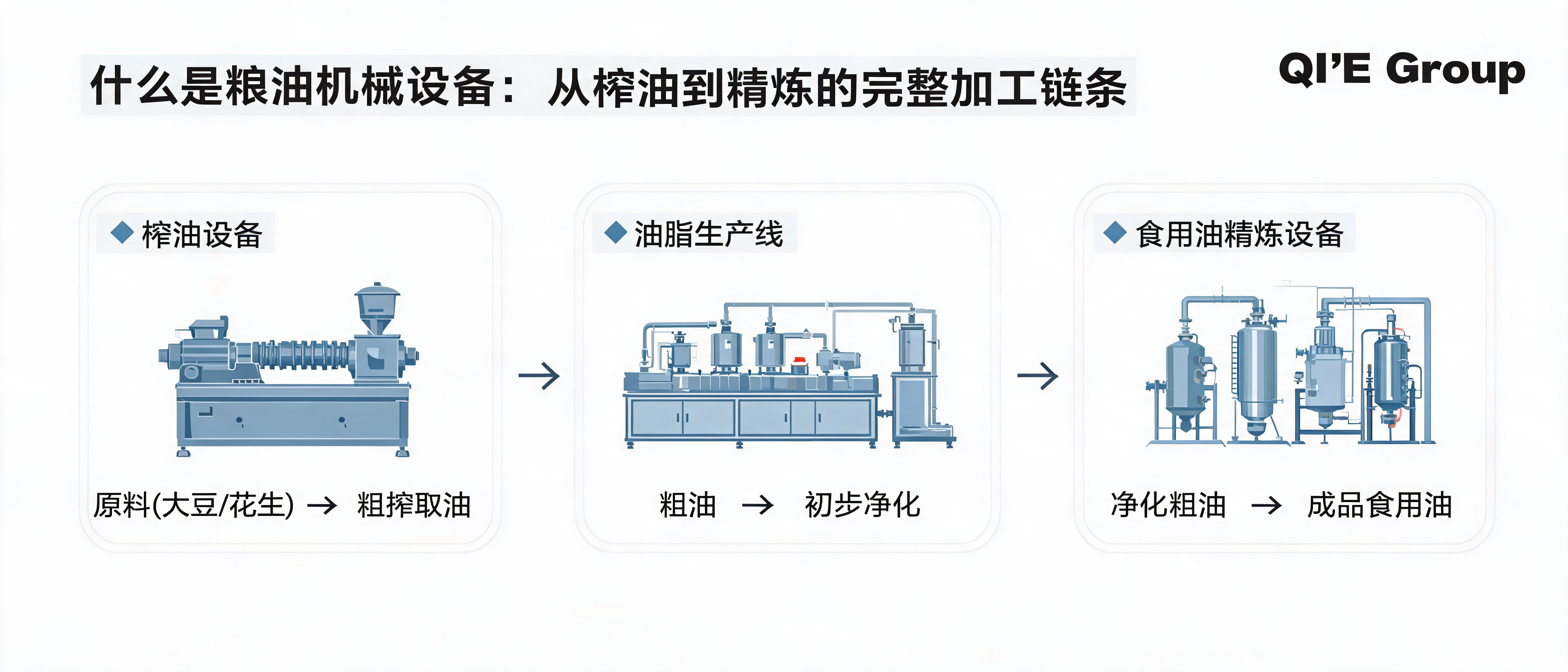
Pressing is one stage of edible oil processing. Depending on the raw material and required final product, the production line may also need edible oil refining equipment. Refining requirements should be assessed alongside the selected pressing or extraction route, not added as an afterthought. This helps align oil handling, process flow, equipment interfaces, and the intended finished-oil standard.
Use a Process-Based Equipment Selection Checklist
- What oilseeds, kernels, or nuts will be processed?
- What capacity is required for the planned operating schedule?
- Is hydraulic pressing, another pressing route, extraction, or an integrated process required?
- Will the output require filtration only or further edible oil refining?
- What level of automation is appropriate for the operating team?
- What are the available power, space, installation, and maintenance conditions?
- What technical services are needed for process design, installation, commissioning, and operator training?
Equipment Support for an Integrated Oil Processing Project
A well-selected edible oil production line connects equipment with the actual needs of the processor. Qi'e Grain and Oil Machinery Co., Ltd. supports customers with equipment solutions covering oil pressing, oil production lines, and edible oil refining, together with process design, installation, commissioning, and technical service.
By clarifying raw materials, capacity, process route, automation needs, and refining requirements at the beginning of a project, processors can make a more informed selection of hydraulic oil press equipment and related production line components.