Planning an edible oil processing line starts with a clear understanding of the raw material, expected production capacity, product requirements, and site conditions. A well-defined plan helps project teams select an appropriate process route, coordinate equipment configuration, and prepare for installation, commissioning, and long-term operation.
Qi'e Grain and Oil Machinery Co., Ltd. supports B2B customers evaluating oilseed processing projects with integrated considerations for oil pressing, extraction, refining, utilities, automation, environmental controls, and technical service. The objective is not simply to assemble machines, but to create a practical processing line aligned with the project’s operational needs.
Oilseed characteristics are the foundation of edible oil processing line planning. Different materials require different preparation methods, processing conditions, and equipment selections. The planning stage should identify the main oilseed or oilseeds to be handled, the intended oil product, and whether the line will be designed for a single material or for flexible processing of multiple materials.
Confirm oilseed type, incoming condition, impurity level, moisture characteristics, storage needs, and expected material supply consistency.
Determine whether the project requires mechanical pressing, solvent extraction, refining, or a combination of these process stages.
Define the intended output, such as crude oil, refined edible oil, or oil prepared for further processing, packaging, or distribution.
Target capacity should be assessed as an operating requirement rather than a standalone number. Project teams should consider planned working hours, seasonal raw-material availability, maintenance intervals, storage turnover, and the relationship between upstream material handling and downstream oil processing. This approach helps avoid mismatches between individual equipment capacities.
| Planning Factor | Why It Matters for Equipment Configuration |
|---|---|
| Required throughput | Sets the basis for selecting handling, preparation, pressing, extraction, refining, and conveying capacity. |
| Operating schedule | Influences how daily or seasonal production requirements translate into line sizing and operational planning. |
| Material storage and flow | Helps coordinate receiving, cleaning, storage, transfer, and processing continuity. |
| Future expansion needs | Supports consideration of plant layout, reserved space, and equipment integration options for later development. |
An edible oil processing project should be planned as a connected system. Equipment selection becomes more reliable when the material flow is defined first, including receiving, cleaning, preparation, oil recovery, oil treatment, storage, and transfer between stages. The exact sequence depends on the oilseed, processing technology, final product requirements, and site-specific conditions.
Equipment configuration should reflect the complete process scope instead of focusing only on the core press or extractor. Supporting equipment, conveying arrangements, process tanks, control systems, and utility interfaces all affect how the production line operates as a whole.
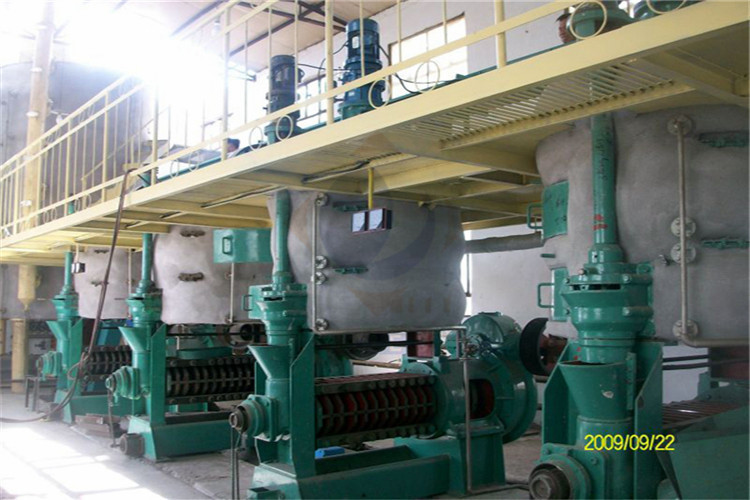
For projects centered on mechanical oil recovery, configuration may include preparation equipment, oil pressing equipment, oil handling units, and the required material transfer connections.
Where solvent extraction is part of the process route, planning should account for the extraction section, associated process interfaces, safety considerations, and environmental controls.
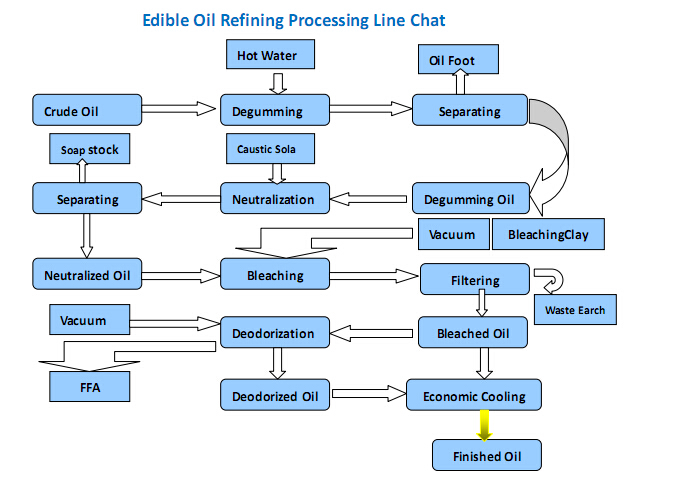
For refined edible oil production, the refining section should be planned in relation to crude oil quality, product objectives, processing capacity, and downstream handling requirements.
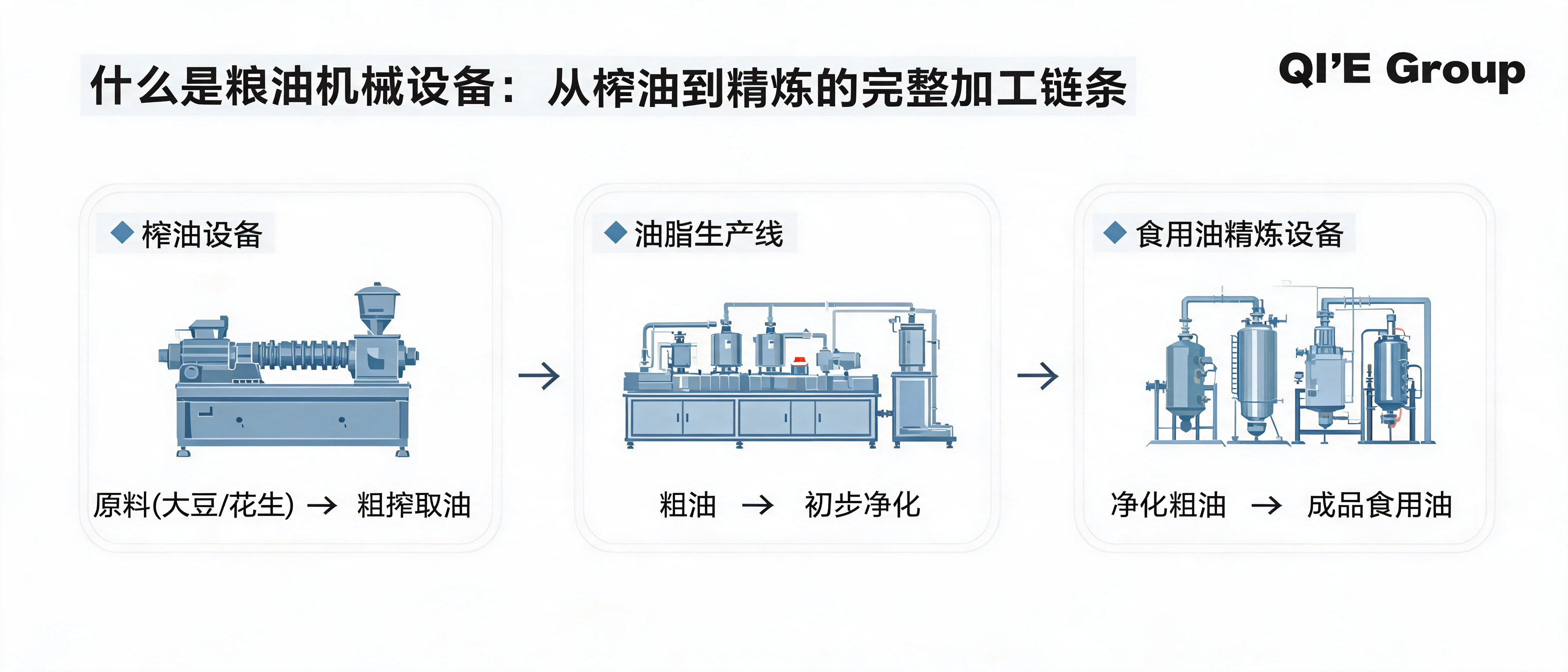
Qi'e Grain and Oil Machinery Co., Ltd. offers equipment for oil pressing, oil production lines, and edible oil refining. Depending on the processing target, project teams may also evaluate solutions such as a soybean oil production line, palm kernel oil production line equipment, vegetable oil solvent extraction equipment, or an edible oil refinery machine.
The production line should fit the physical plant and available infrastructure. Before equipment is finalized, the project team should review the building layout, material movement routes, installation access, and available utility connections. The desired automation level should also be clarified early, as it influences controls, operating procedures, and equipment coordination.
A successful edible oil processing line begins with requirements that are clear enough to guide technical decisions. By evaluating oilseed characteristics, capacity, process flow, equipment interfaces, automation, utilities, and environmental considerations together, businesses can establish a more workable basis for project development.
As a supplier of grain and oil machinery, Qi'e Grain and Oil Machinery Co., Ltd. can support customers through equipment planning, production line design coordination, installation, commissioning, and technical service for edible oil processing projects.
 139
|
139
|
 oil pressing pretreatment module
oilseed storage silo design
hammer mill vs roller crusher
oilseed conditioning softening
PLC automation for oil mill
oil pressing pretreatment module
oilseed storage silo design
hammer mill vs roller crusher
oilseed conditioning softening
PLC automation for oil mill
 225
|
Qi'e Grain and Oil Machinery Co., Ltd.
grain and oil machinery project
production line delivery
equipment installation and commissioning
technical service and project management
225
|
Qi'e Grain and Oil Machinery Co., Ltd.
grain and oil machinery project
production line delivery
equipment installation and commissioning
technical service and project management
 171
|
ZY24 screw oil press maintenance
continuous oil press lubrication standards
oil press key parts service intervals
oil press troubleshooting guide
Penguin Group oil press maintenance
171
|
ZY24 screw oil press maintenance
continuous oil press lubrication standards
oil press key parts service intervals
oil press troubleshooting guide
Penguin Group oil press maintenance
 278
|
continuous screw oil press efficiency
small and medium oil mill automation
oilseed processing optimization
screw oil press working principle
oil press equipment selection
278
|
continuous screw oil press efficiency
small and medium oil mill automation
oilseed processing optimization
screw oil press working principle
oil press equipment selection
 361
|
hydraulic oil press machine troubleshooting
hydraulic system leak repair
hydraulic oil quality inspection
hydraulic hose and fitting leak diagnosis
preventive maintenance for hydraulic presses
361
|
hydraulic oil press machine troubleshooting
hydraulic system leak repair
hydraulic oil quality inspection
hydraulic hose and fitting leak diagnosis
preventive maintenance for hydraulic presses