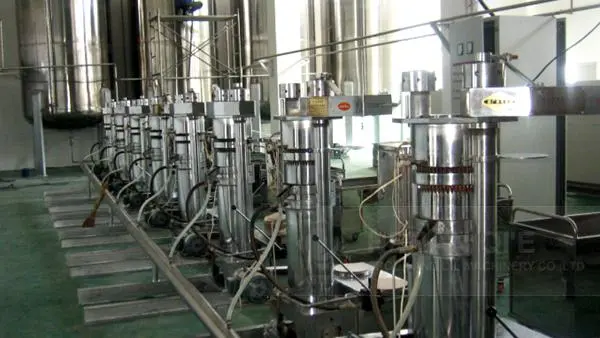
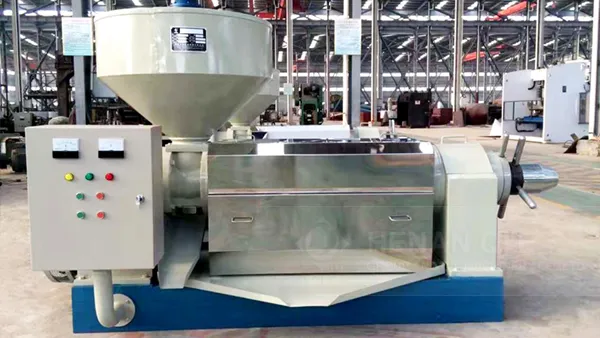
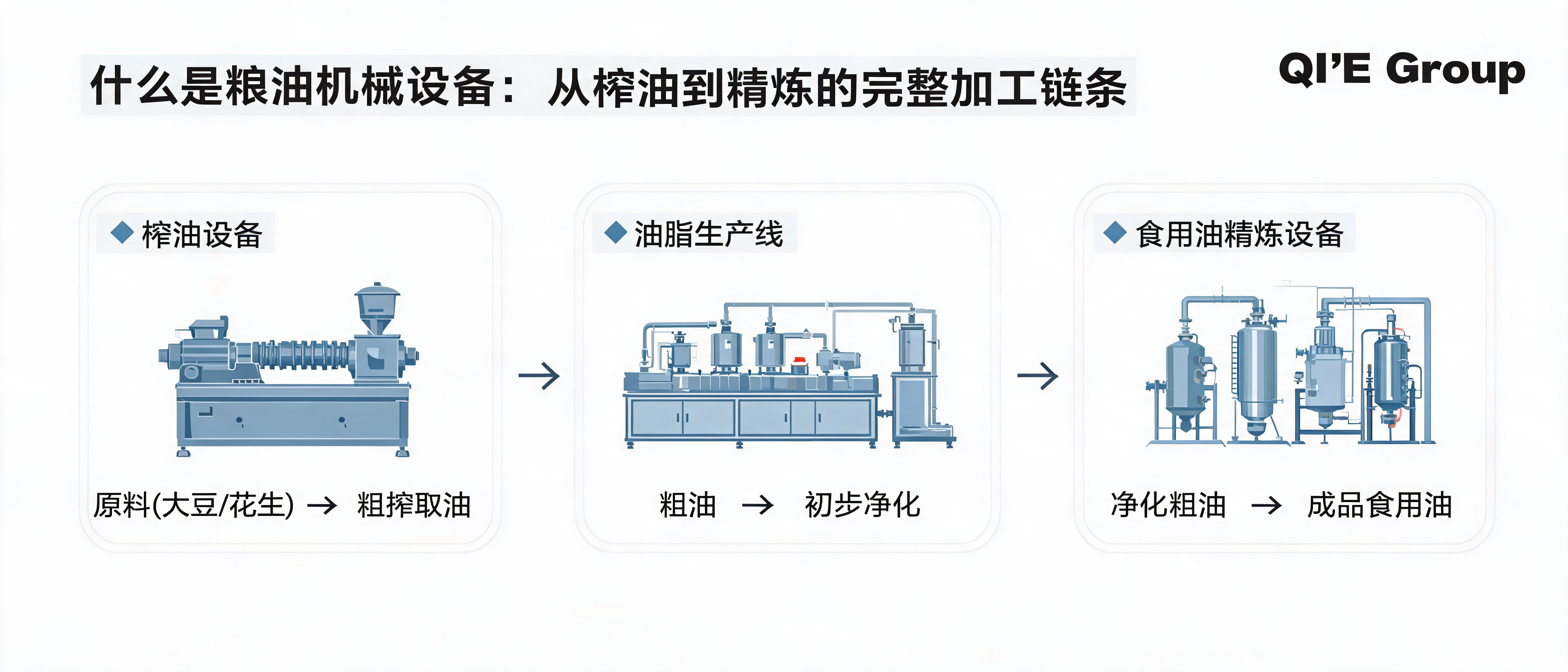
Selecting edible oil processing equipment begins with a practical understanding of the raw material, target capacity, finished-oil requirements, and operating conditions. For oilseed processors, the right configuration may include a hydraulic oil press, an extraction system, refining equipment, or a coordinated production line that connects these stages.
Qi'e Grain and Oil Machinery Co., Ltd. supports B2B customers with oil pressing equipment, oil production line equipment, and edible oil refining equipment. This guide outlines the key considerations for processors handling materials such as soybean, palm kernel, sunflower seed, other vegetable seeds, and nuts.
Different oil-bearing materials have different physical properties, oil content, preparation needs, and processing routes. Equipment selection should therefore be based on the actual feedstock rather than capacity alone. A processor should identify whether the objective is direct mechanical pressing, solvent extraction, refining of crude oil, or an integrated process from raw material handling to finished edible oil.
Soybean processing may require a production route matched to the intended scale, oil recovery method, and subsequent crude-oil treatment requirements.
Palm kernel processing should consider kernel condition, feed preparation, press configuration, and the required downstream handling of the extracted oil.
Seeds and nuts vary in size, moisture condition, and pressing behavior. The equipment route should be evaluated together with material preparation and desired product characteristics.
Capacity planning should account for more than the amount of material processed in one cycle. It should also consider operating hours, feed preparation time, labor availability, maintenance intervals, storage arrangements, and whether the plant needs room for future expansion. A compact press may be appropriate for a smaller operation, while continuous or integrated systems may be more suitable for larger production targets.
| Processing Need | Equipment Consideration | Planning Question |
|---|---|---|
| Small or developing operation | Simple operation, manageable footprint, practical maintenance requirements | Can the equipment fit daily production and available staffing? |
| Growing processing business | Stable operating pressure, automation support, compatibility with upstream and downstream equipment | Can the line be expanded without redesigning the entire process? |
| Integrated edible oil line | Coordinated pressing, extraction and refining equipment selection | What finished-oil quality and process control are required? |
A hydraulic oil press is a mechanical pressing solution designed for a broad range of vegetable seeds and nuts. It uses a hydraulic system to maintain working pressure during the pressing process. For processors that value straightforward operation and a compact production approach, a hydraulic oil press can be an important part of edible oil processing equipment selection.
The actual oil yield and product quality depend on factors including raw-material variety, moisture, cleanliness, pre-treatment, roasting conditions, operating parameters, and maintenance practices. Equipment should be evaluated with the customer’s own material and process requirements in mind.
An oil press is one part of a broader processing decision. Depending on the business model and required finished-oil specification, the project may also need material preparation, oil extraction, filtration, refining, storage, and packaging arrangements. Defining the full route early helps avoid mismatched equipment and unnecessary handling steps.
Automation should match the skills and staffing available at the processing site. An automatic hydraulic oil press can simplify routine operation, but operators still need to follow the equipment instructions, inspect key components, and maintain clean, safe working conditions. The most appropriate automation level is one that supports reliable operation without adding unnecessary complexity.
Review control functions, operator access, training requirements, and the level of manual intervention required during each production cycle.
Consider energy consumption, material handling efficiency, waste management, and local environmental requirements as part of the project design.
Confirm available space, power supply, material flow, ventilation, installation access, and service conditions before finalizing a configuration.
Reliable equipment performance depends on correct installation and disciplined daily use. Before commissioning, processors should establish a clear plan for installation, operator training, inspection, cleaning, lubrication or hydraulic-system checks where required, and replacement-part planning.
A well-matched oil press production line is not selected only by machine type. It is selected by how effectively the equipment, raw material, people, site conditions, and finished-oil objectives work together.
Qi'e Grain and Oil Machinery Co., Ltd. provides equipment solutions spanning oil pressing, oil extraction, and edible oil refining. For a more relevant equipment recommendation, prepare details about your oilseed type, expected capacity, target market, desired automation level, available utilities, and finished-oil requirements. This information provides the foundation for selecting an appropriate hydraulic oil press or complete edible oil processing equipment configuration.

 101
|
 Qi'e Grain and Oil Machinery Co., Ltd. grain and oil processing machinery oil pressing equipment edible oil production line edible oil refining equipment
206
|
Qi'e Grain and Oil Machinery oil pressing machine refining equipment process coordination standardized operation
 271
|
continuous screw oil press oil press maintenance oil press blockage prevention wear prevention in oil presses oil press fault diagnosis
217
|
Qi'e Grain and Oil Machinery Co., Ltd. integrated grain and oil machinery solutions hydraulic oil press equipment edible oil production line edible oil refining equipment
226
|
Qi'e Grain and Oil Machinery Co., Ltd. grain and oil machinery project production line delivery equipment installation and commissioning technical service and project management