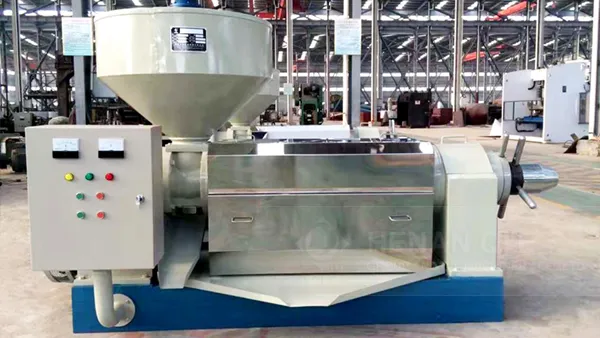
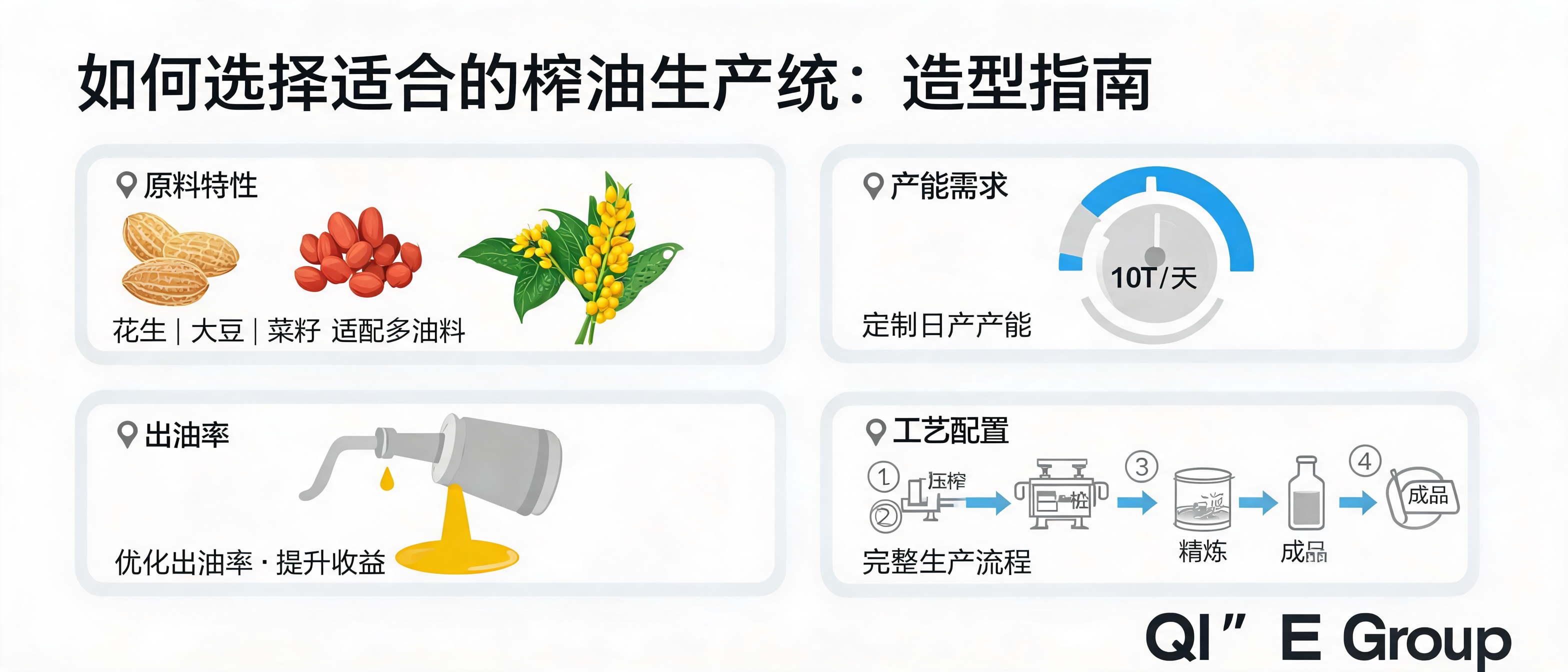
An automated oil pressing line should be configured around the oilseed, the required throughput and the intended use of the oil—not simply around the press itself. Preparation, material transfer, pressing and filtration must work together to support a consistent production process.
QIE Group, also known as Qi'e Grain and Oil Machinery Co., Ltd., supplies oil pressing equipment and provides engineering design, installation, technical support and after-sales services. For agricultural processors, edible oil producers and oilseed processing businesses, equipment selection starts with defining the production requirements and deciding which stages need automation.
Oil pressing equipment mechanically separates oil from prepared oil-bearing materials. This guide focuses on vegetable oil and oilseed processing. Different feedstocks and end uses may require different preparation methods, operating conditions and downstream treatment.
Assess incoming seed quality, seasonal availability, storage conditions and the desired processing schedule. The preparation line should match the material supplied rather than assume uniform seed characteristics.
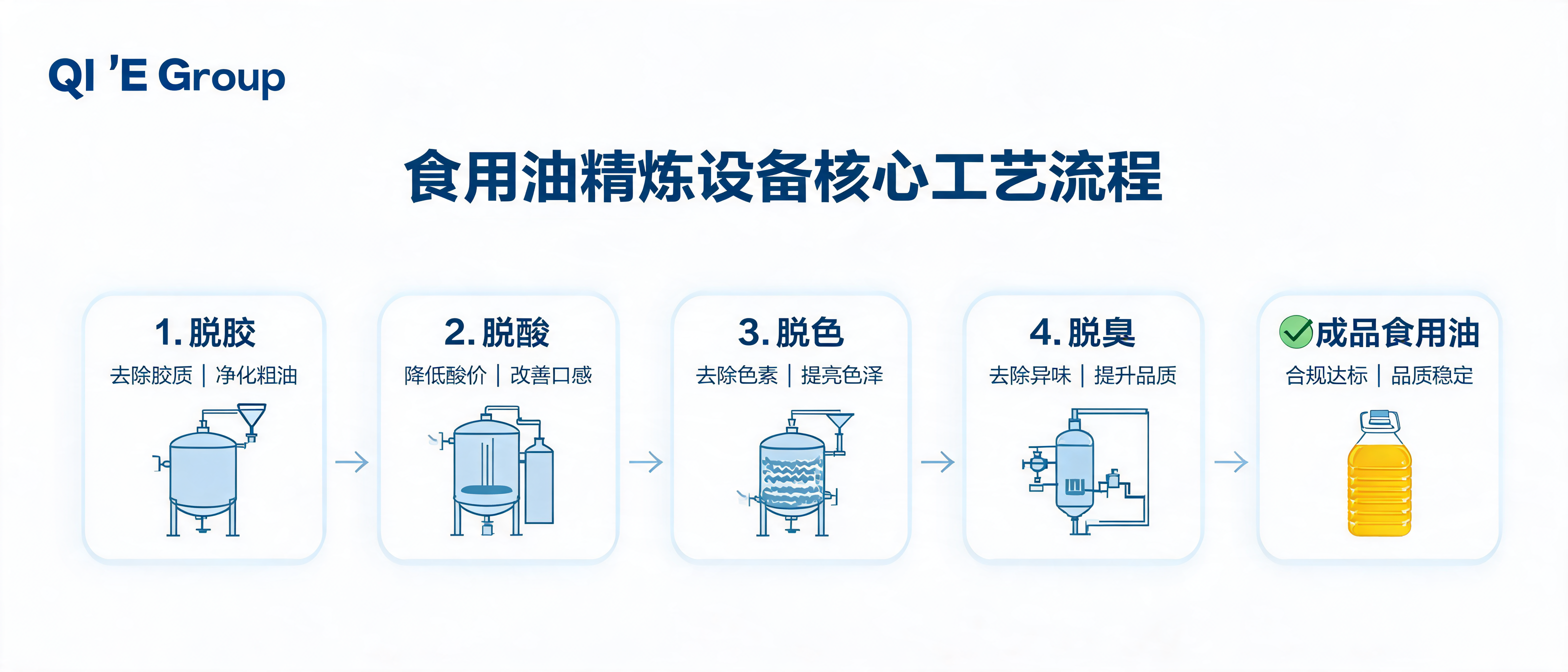
Define the required oil quality and whether the project includes further refining. Pressing and filtration are not interchangeable with refining; the final production route must meet applicable food-quality requirements.
These applications require separate assessment of oil specifications, downstream processing and regulatory compliance. An oil pressing line alone does not establish suitability for a finished fuel or cosmetic product.
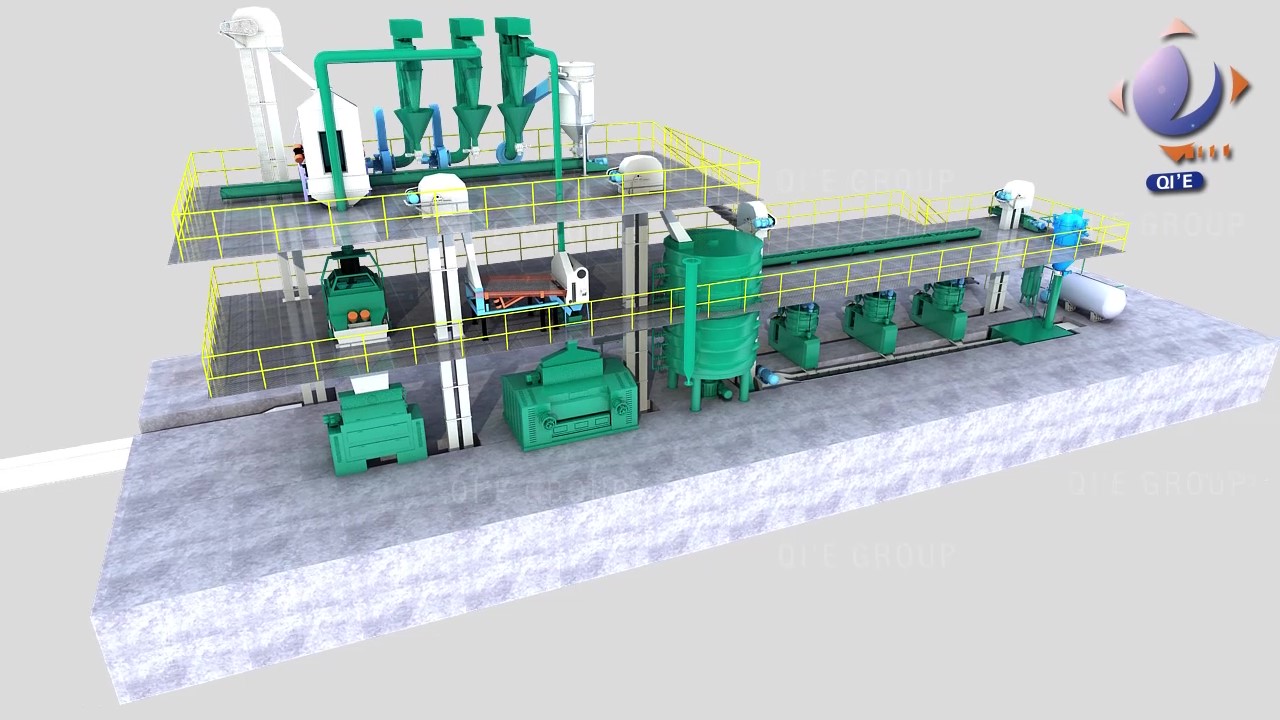
QIE Group’s equipment scope covers oilseed storage, screening, destoning, crushing, softening or conditioning, pressing and filtration. The stages included, their sequence and their capacity should be confirmed for the selected feedstock and process.
| Process stage | Role in the line | Configuration questions |
|---|---|---|
| Storage and feeding | Organize raw-material supply to processing. | How much material must be held, and how will it reach the next stage? |
| Screening and destoning | Remove unwanted materials before further preparation. | What impurities occur in the incoming seed, and what cleaning capacity is needed? |
| Crushing and conditioning | Prepare the material for the selected pressing process. | Which preparation steps and operating conditions suit the feedstock? |
| Pressing | Mechanically separate oil from prepared material. | Can the press handle the required throughput under the specified process conditions? |
| Filtration | Separate suspended solids from pressed oil. | What filtration capacity and downstream oil requirements must be accommodated? |
Line capacity depends on the compatibility of all stages. A higher-capacity press does not, by itself, increase the capacity of upstream preparation or downstream filtration.
Fully automatic oil pressing equipment and a fully automated production line describe different scopes. Buyers should establish the automation boundary before comparing proposals.
Explore QIE Group’s automatic oil press equipment as part of a broader line assessment, rather than treating machine automation as proof of whole-line integration.
QIE Group serves markets in Asia, Africa and South America. Regional oilseed processing requirements vary within each market, so configuration decisions should rely on local operating conditions rather than broad geographical assumptions.
Monitoring, parameter management, energy efficiency and modular integration are useful topics for an oil pressing production line configuration discussion. Their value depends on the equipment selected, the feedstock and the operating environment.
No single configuration guarantees a uniform oil yield, energy saving or investment return. Performance expectations should be tied to agreed raw-material characteristics, process conditions and evaluation methods.
To begin a configuration discussion with QIE Group, provide:
QIE Group’s design, installation, technical support and after-sales services support the discussion from equipment selection through project implementation. Where further oil treatment is required, edible oil refining equipment should be assessed alongside the pressing line to define a coherent production route.

 321
|
 Qi'e Grain and Oil Machinery grain and oil processing equipment multifunctional hot and cold screw oil press edible oil refining equipment oil production line solutions
 169
|
Qi'e Grain and Oil Machinery edible oil processing equipment oil pressing production line vegetable oil solvent extraction edible oil refining equipment
 81
|
Qi'e Group fully automatic oil pressing equipment working principle mechanical oil pressing automatic feeding and pressing temperature control oil residue separation and filtration
 226
|
Qi'e Grain and Oil Machinery grain and oil machinery oil pressing equipment edible oil production line edible oil refining equipment
 202
|
Qi'e Grain and Oil Machinery Co., Ltd. edible oil production line equipment oil press equipment selection multifunctional screw hot and cold oil press edible oil refining equipment