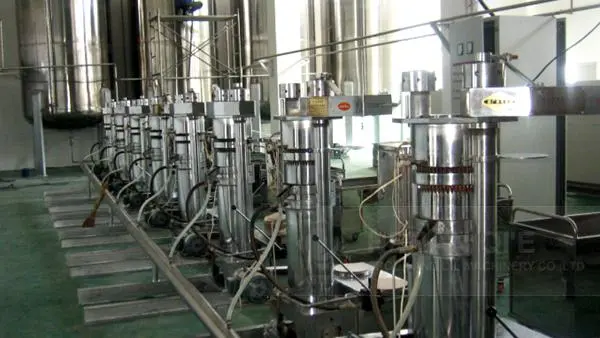
Continuous oil pressing depends on more than keeping a press running. Oilseed preparation, feed rate, pressing conditions, oil collection and press cake discharge must work together to keep material moving through the production line.
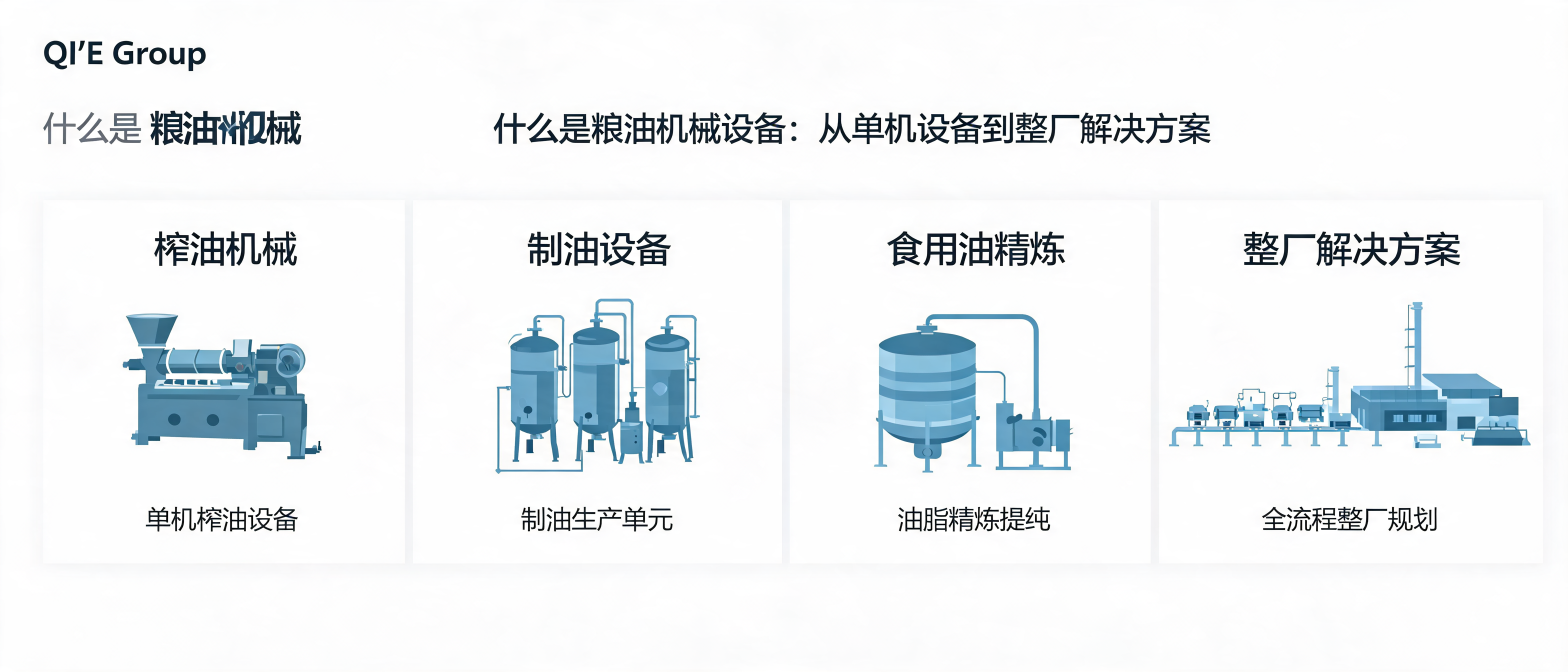
Qi'e Grain and Oil Machinery Co., Ltd. supplies oil pressing equipment and supporting production line solutions, with services covering design, installation, technical support and after-sales assistance. For procurement and technical teams, understanding the process helps identify which equipment configuration and control functions a project actually needs.
What supports stable continuous operation? Consistent oilseed preparation, controlled feeding, suitable pressure and temperature, and sufficient downstream handling capacity. Automatic functions can help manage these conditions, but their scope must be verified against the selected equipment configuration.
Qi'e's oil pressing solutions cover process stages including oilseed storage, screening, stone removal, crushing, softening, pressing and filtration. The required sequence depends on the raw material and the intended processing method; not every oilseed requires identical pretreatment.
Changes in feed rate can change the load on the press. Insufficient feeding may leave capacity underused, while excessive feeding can overload the process. Where provided, feed adjustment and load monitoring help operators coordinate material supply with pressing conditions.
Pressing performance depends on the interaction between equipment settings and oilseed condition. Greater pressure alone does not guarantee better results. Moisture, preparation, feed consistency and the permitted operating range all need consideration.
Temperature influences how prepared oilseed behaves during pressing. Heating, temperature sensing and automatic regulation should not be assumed to be standard on every model. Confirm their availability, measurement locations and adjustment ranges for the proposed configuration.
These variables should be assessed together. If the raw material changes, a previously suitable feed rate or temperature setting may need adjustment according to the equipment instructions and process requirements.
“Automatic” does not describe a single, universal control package. Ask for technical documentation that identifies what is monitored, what can be adjusted, and how the equipment responds to abnormal conditions.
| Area to verify | Questions for the proposed configuration |
|---|---|
| Raw material and pretreatment | Which oilseeds are suitable? What preparation, moisture and temperature conditions are required? |
| Feeding and monitoring | How is feed rate adjusted? Which load or process indicators are available, and which adjustments require an operator? |
| Temperature and fault handling | Are temperature sensing and regulation included? What alarms, protective actions and restart procedures are specified? |
| Line compatibility | Can upstream preparation, oil collection, filtration and cake handling accommodate the planned pressing rate? |
| Maintenance and utilities | What cleaning, inspection and wear-part replacement are required? What utilities and maintenance access does the installation need? |
Throughput, oil yield and energy consumption are meaningful only when the test conditions are clear. Compare equipment using the same raw material basis, preparation conditions and operating requirements, rather than relying on an isolated capacity figure.
Qi'e supports oil processing projects with equipment supply and services from design through installation and after-sales support. Selecting a press should therefore include a review of the surrounding process—not just the machine itself.
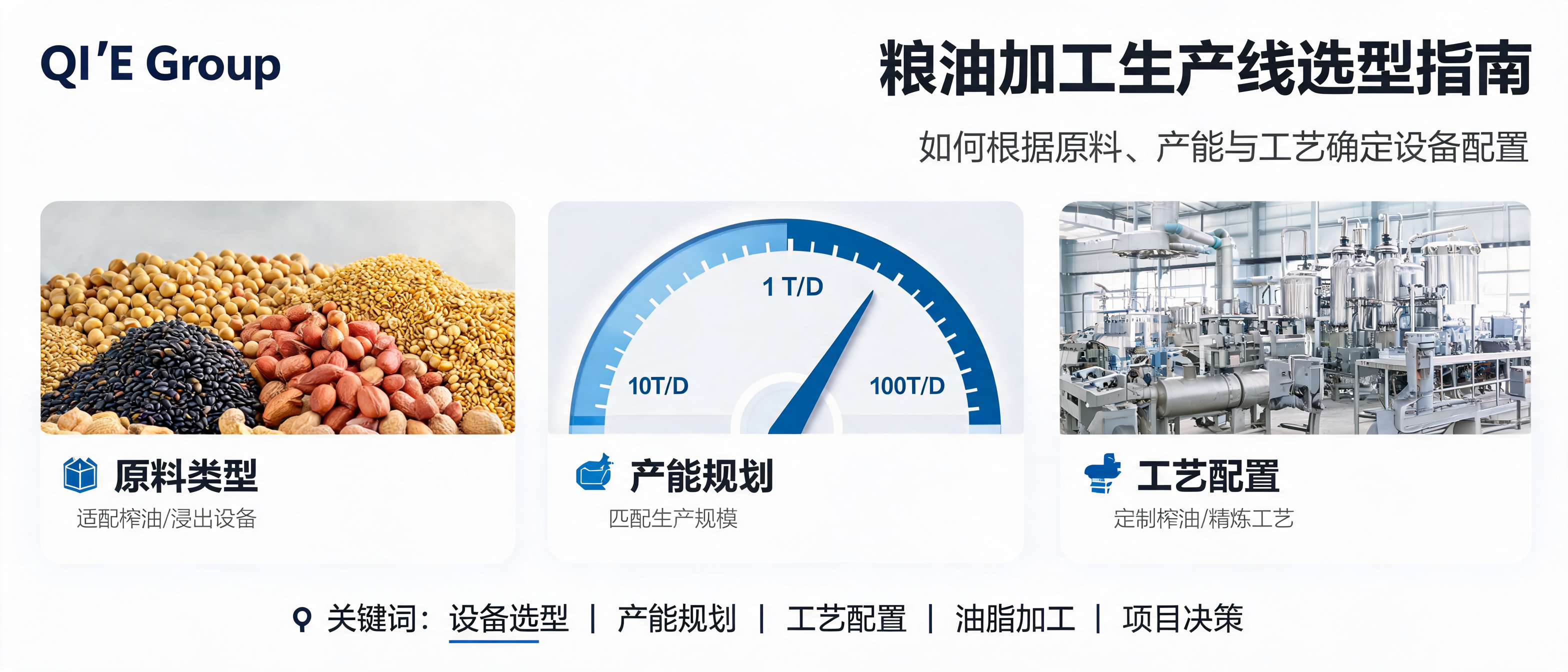
For a configuration discussion, prepare your oilseed type, target processing capacity, intended oil specifications, available utilities and existing equipment details. These inputs provide a practical starting point for reviewing automatic oil pressing equipment, control requirements and production line compatibility.

 401
|
 Qi'e Grain and Oil Machinery Co., Ltd. grain and oil machinery equipment edible oil production line hydraulic oil press edible oil refining equipment
 226
|
Qi'e Grain and Oil Machinery grain and oil machinery oil pressing equipment edible oil production line edible oil refining equipment
 182
|
Qi'e Grain and Oil Machinery Co., Ltd. multifunctional screw hot and cold oil press edible oil processing line oil pressing equipment edible oil refining equipment
115
|
Qi'e Grain and Oil Machinery Co., Ltd. edible oil processing solutions multifunction screw oil press edible oil production line oil refining equipment
74
|
Qi'e Grain and Oil Machinery Co., Ltd. integrated grain and oil machinery solutions hydraulic oil press oil production line equipment edible oil refining equipment