Selecting automatic oil press equipment is a process decision, not simply a machine purchase. The right configuration should match the oilseed characteristics, target processing capacity, pretreatment route, plant utilities, operating approach, and long-term service requirements. A well-matched system helps create a more stable oilseed processing workflow from material receiving through pressing and crude oil filtration.
As a supplier of oil pressing, oil production line, and edible oil refining equipment, QIE Group supports buyers in assessing these factors before equipment configuration, project design, installation, and technical service are arranged.
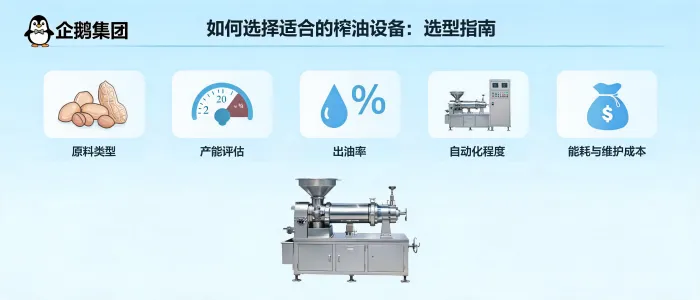
Different oilseeds have different physical properties, oil content, moisture conditions, shell content, and pressing behavior. These characteristics influence the pretreatment equipment required before the automatic oil press, as well as the suitable pressing method and line layout.
Identify the oilseed type, expected moisture range, impurity level, seed size, hardness, and whether shells or hulls require removal. These inputs affect cleaning, de-stoning, crushing, softening, cooking, and pressing requirements.
Clarify whether the project is intended for crude oil production, further refining, or a specific market application. The required downstream oil handling and filtration process should be considered together with the press.
If multiple oilseeds may be processed, the equipment selection should account for differences in preparation conditions and operating parameters rather than assuming one setting is suitable for every material.
Oil press capacity should be evaluated in relation to the entire production line. A press with an appropriate nominal throughput still requires balanced upstream feeding, pretreatment, oil collection, filtration, and cake handling. The practical capacity of an oilseed processing project depends on how these stages work together.
| Evaluation Area | Questions to Clarify | Why It Matters |
|---|---|---|
| Daily processing target | How much oilseed needs to be processed per operating day or shift? | Helps define the scale of pressing and supporting equipment. |
| Operating schedule | Will production run continuously, seasonally, or in planned batches? | Supports a realistic capacity and maintenance plan. |
| Future expansion | Is additional processing capacity expected later? | Allows space, conveying, and utilities to be planned with expansion in mind. |
| Material flow balance | Can cleaning, pretreatment, pressing, filtration, and cake discharge support the same flow? | Reduces the risk of bottlenecks between process stages. |
Pretreatment has a direct effect on pressing stability. Depending on the raw material and process route, an oilseed processing line may include storage, screening, de-stoning, crushing, softening, cooking, conveying, and filtration. Each stage should be assessed as part of one connected production system.
Automation requirements vary by project. For some operations, automatic feeding and coordinated control can help simplify routine production management. For others, operators may need greater visibility and manual adjustment capability based on raw material changes or local operating practices.
Before selecting an automatic oil press system, define: the preferred control method, operator skill level, maintenance resources, alarm and safety expectations, electrical supply conditions, and the degree of integration required with conveyors, pretreatment equipment, filters, or refining equipment.
An automatic oil press must fit the physical and utility conditions of the intended facility. Early plant assessment supports smoother equipment layout planning and helps identify supporting requirements before installation.
For commercial oilseed processing, equipment reliability is closely connected to consistent operation, planned maintenance, and access to technical support. Buyers should evaluate both the machine design and the supplier’s ability to support the project throughout its operating life.
Before requesting a final automatic oil press equipment proposal, prepare the following project information:
The most suitable automatic oil press equipment is the configuration that aligns with the actual oilseed, process route, capacity requirement, facility conditions, and operating plan. Looking at these factors together provides a clearer basis for selecting a reliable oilseed processing solution.
QIE Group provides oil pressing equipment and integrated project support covering equipment design, installation guidance, technical support, and after-sales service for oilseed processing applications. Share your raw material and project requirements to discuss an equipment configuration suited to your intended production process.

 480
|
 Qi'e Grain and Oil Machinery Co., Ltd. edible oil production line equipment oil pressing equipment selection oil extraction process edible oil refining equipment
 90
|
Qi'e Grain and Oil Machinery Co., Ltd. edible oil processing equipment oil pressing production line edible oil refining equipment integrated oil processing solutions
 200
|
Qi'e Grain and Oil Machinery Co., Ltd. grain and oil machinery solutions multifunction screw hot and cold oil press oil pressing and refining equipment edible oil processing line
 202
|
Qi'e Grain and Oil Machinery Co., Ltd. edible oil production line equipment oil press equipment selection multifunctional screw hot and cold oil press edible oil refining equipment
 249
|
Qi'e Grain and Oil Machinery Co., Ltd. oil processing machinery oil production line equipment hydraulic oil press edible oil refining equipment